
By Jeremy Williams
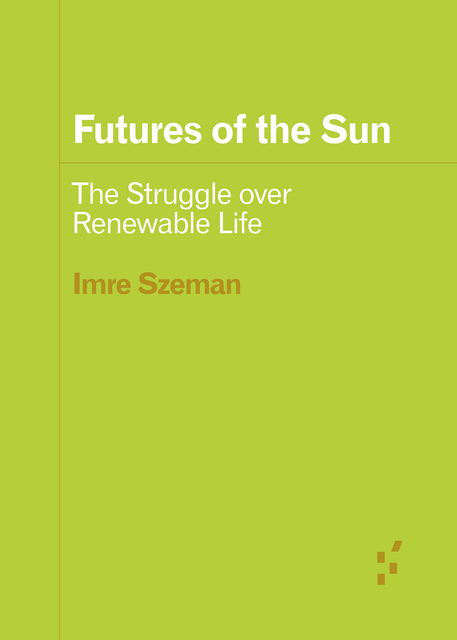
Over the past 200 years, political power has become deeply entwined with fossil fuels. The energy transition is now troubling the peace, and those alliances are shifting. As renewable energy takes over from fossil fuels, there is a tug-of-war underway to control the narrative. There are already competing stories, “each trying to be the first to make sense of what a politics anchored on renewable energy and climate action might look like.”
That’s what Imre Szeman’s short book Future of the Sun is about – not the future of the burning orb itself, but the way we understand a solar future. A Canadian professor of sustainability and human geography, Szeman admits that this an emerging field. It’s too early to write anything definitive, but he describes three broad trends to keep an eye on.
The first is the possibility of green nationalism, promoted by political commentators who recognise the unique power of a national agenda with popular support and wonder if it could be bent to climate change. Anatol Lieven’s book Climate Change and the Nation State, reviewed here, is a key text for proponents of positive nationalism. There’s no other force like it for mobilising ordinary people, they argue – but then there’s the long history of nationalism’s role in war and oppression, and it looks like a risky bet. Szeman just comes out with it: “There is no good nationalism”, and climate change is too important to leave to governments to sort out.
If not governments, perhaps billionaire entrepreneurs are the force we’re looking for, and the second chapter in the book investigates Bill Gates and his efforts on climate. Gates doesn’t think governments are going to fix the climate and that business leaders are better placed to deliver meaningful change – for a tidy profit. “Climate change doesn’t necessitate new forms of nationalism,” writes Szeman of this approach, “it requires meta-entrepreneurs to take the reins of power, acting for everyone’s good.” If you’ve read Bill Gates’ book – reviewed here – you’ll know his answer to the title How to Avoid a Climate Disaster: with capitalism and technofixes and scant regard for accountability.
Both of those approaches, government-led and elite-led, have an effect in common. They both risk ignoring ordinary citizens. Those citizens might begin to feel that others are making the big decisions without them, and that leads to a third emerging narrative: a right-wing backlash against climate action. The book draws examples from Albertan oil politics and the United We Roll movement against President Trudeau. Right-wing populists can twist sustainability into an elitist project which ultimately only protects the status quo and its fossil fuel company shareholders.
The answer to all three of these, Szeman suggests, is an approach that draws more from commons thinking. “Who owns the sun? Everyone!” This feels right to me. Renewable energy is naturally decentralised and lends itself to energy democracy. Unlike big-ticket energy sources such as nuclear, there’s no inherent reason why big business and big government need to drive the process. The transition should serve everyone, and being aware of competing narratives is the first step to countering them.
First published in The Earthbound Report.
Discover more from A greener life, a greener world
Subscribe to get the latest posts sent to your email.
Categories: book review, books, Energy, Reviews
 A greener life, a greener world