During my annual summer visits to my birth country, Denmark, I’m often in awe of Denmark’s various sustainability initiatives. But in recent years, one development has occurred that, to say the least, I’m less impressed with.
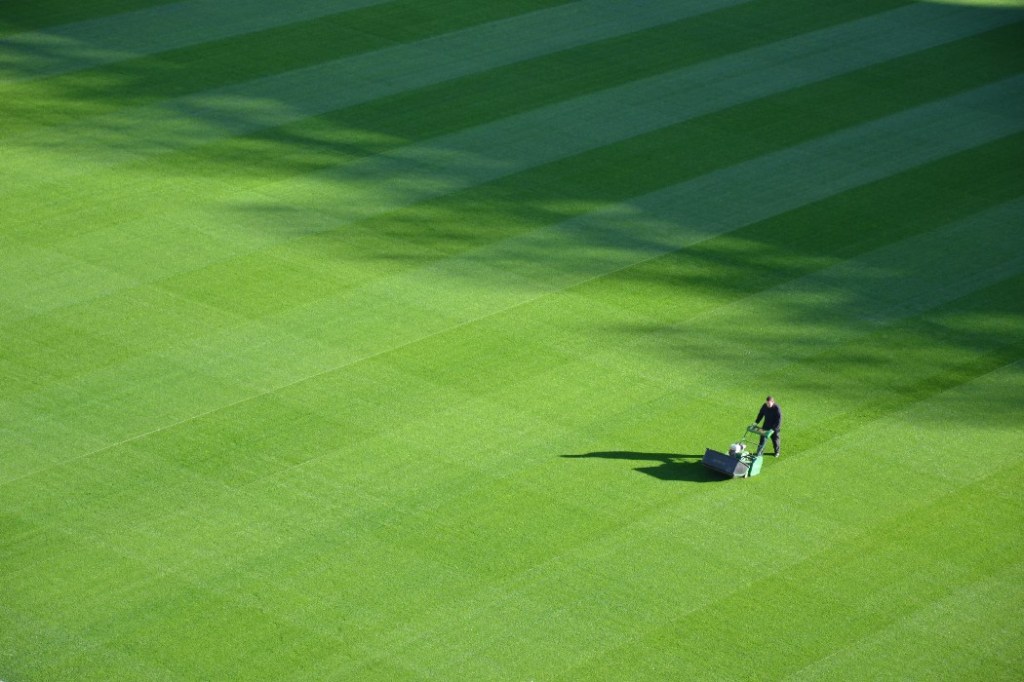
Taking a walk in the wealthy suburban area on the outskirts of the provincial town of Thisted, I see one villa after the other, nobody around but I’m not actually alone, because in almost every garden or should I say lawn I pass there is a small intrusive machine driving up and down hard at work cutting the grass. These machines or robots are programmed to cut the grass each day to golf course standards. I have never seen a more pointless exercise.
In reality, the issue is not how the grass is cut, but the fact that it is cut so frequently and the fact that lawns are taking up an ever-growing proportion of gardens.
It makes me wonder: What is the point of lawns? And the wealthier the owners, the less point there is to the lawns. The ones I passed were deserted (no one was using them for anything). There seemed to be a competitive thing between homeowners regarding who could have the most tightly cut lawn.
Lawns in the age of the climate and biodiversity crisis
Not only are lawns pointless, but in the age of a climate and biodiversity crisis, they’re also making the problem worse. My complaint is not with grass but with how lawns are managed.
Fine-cutting grass is eroding biodiversity
By fine-cutting your grass every week, you’re removing every single element that may have been left of biodiversity. Frequent grass cuttings remove any wildflowers, insects and pollinators who live in the grass.
With the industrialisation of our countryside and with depressingly little land set aside for nature, and with designated land not fully protected or wild, gardens have become one place where biodiversity, even on a limited capacity, could be allowed to thrive. But with the industrialisation of gardens also ‘en marche’, not even that can be relied upon anymore.
Then of course there is the issue of the climate crisis and the drought conditions now experienced in many countries around the world. Our failure to act is plunging many countries into a water crisis as well. And so it is perverse that homeowners use litres of precious water to water their gardens so they can look as green as ever, even though the countryside around them looks more like a dust bowl, and food prices are skyrocketing due to in part lack of irrigation.
As I said above the issue is not the grass itself. It is much more about how it is managed, and the disproportionate space it takes up in modern gardens.
Join the gardening rewilding movement
Why not rewild your own garden? Let the grass grow wild and long. Do not water it, do not cut it and notice the rich natural biodiverse space you could create (for bees, birds, butterflies, ladybirds, and other pollinating insects and with earthworms turning to the soil).
If this is too drastic for you, start by a strip or maybe just a corner of your lawn and notice the impacts.
You may notice impacts you have not before noticed, especially if you’re also growing flowers, vegetables or fruit.
It is all about a healthy balance
Have a balanced picture. If your garden is primarily grass, then something is wrong. Why not add some vegetables and herbs to the mix, along with some fruit bushes and fruit trees, to create shade?
It is of course not only homeowners who are to blame. Local councils and municipalities should do a much better job of managing the land they control. They should be creating rewilded zones, growing more trees and using their public spaces for growing food rather than grass, and certainly should not be wasting resources on watering grass.
While we are at it, governments should forbid parks and institutions such as golf courses, sports fields and so on, from watering their grass. This should not be just a temporary measure because we are in a drought, but such rules should last all year round no matter the weather.
The climate crisis as well as the biodiversity crisis are here to stay and we should not make it worse with the pointless way lawns are managed.
What can you do?
The first and easiest thing you can do is to add your voice to the campaigns in rethinking our approach to our lawns, such as this one, which urges gardeners not to mow their lawns throughout May.
As many European countries are currently undergoing historic dry Spring conditions, further regulations on water issue is bad news for gardens where lawns dominate the picture.
Take inspiration from gardening events such as the 2025 RHS Chelsea Flower Show, where gardeners and landscapers visualise what a drought-resistant garden could look like.
I recall my late Dad urging my Mum to delay lawn mowings to benefit pollinators, this was before I came to learn how important this really is, and how much impact you can achieve by doing so little.
Anders Lorenzen is the founding Editor of A greener life, a greener world.
Discover more from A greener life, a greener world
Subscribe to get the latest posts sent to your email.
Categories: biodiversity, climate change, environment, homes, nature
 A greener life, a greener world
1 reply »