By Anders Lorenzen
In 2024, the UK, the birthplace of the industrial revolution and powering modern civilisation, became the first developed economy to have completely weaned itself off coal.
Campaigners and advocates for dealing with the climate crisis would have hoped this would set a new global trend for declining coal usage. However, the global trend and even the European trend tell a different story.
The German example
Germany, the economic and industrial powerhouse in Europe in 2023, decided, for ideological and emotional reasons, to wean itself off nuclear power, even though the low-carbon baseload energy source was key to stability and economic output. There was no risk of a nuclear incident, such as Japan’s Fukushima accident, which was one of the basic reasons for the decision.
German policymakers argued that as nuclear was decommissioned, renewables would take over, earmarking their flagship Energiwende scheme. But this did not happen. The more nuclear power plants they decommissioned, the more coal consumption increased, both in terms of imports but also in terms of opening new German coal mines. As they de-commissioned nuclear power, they became increasingly reliant on gas from Russia, which has since become a huge geopolitical issue following the invasion of Ukraine. Ironically, Germany also imports nuclear-produced electricity from France.
Last month, the International Energy Agency (IEA) released its report, Coal 2024, which looks at how coal usage is far from decreasing worldwide.
In 2024, the demand for coal reached new heights due to the world’s increasing appetite for more electricity capacity. After plummeting at the height of the pandemic as the world’s industrial activity significantly decreased, it has since rebounded strongly and is expected to set a new record of 8.7 billion tonnes in 2024.
IEA analysts expect this amount to remain relatively stable until around 2027, when consumption levels will start to level off as renewable energy sources start to play a more significant role, particularly in China – the world’s largest coal consumer and producer.
The China question
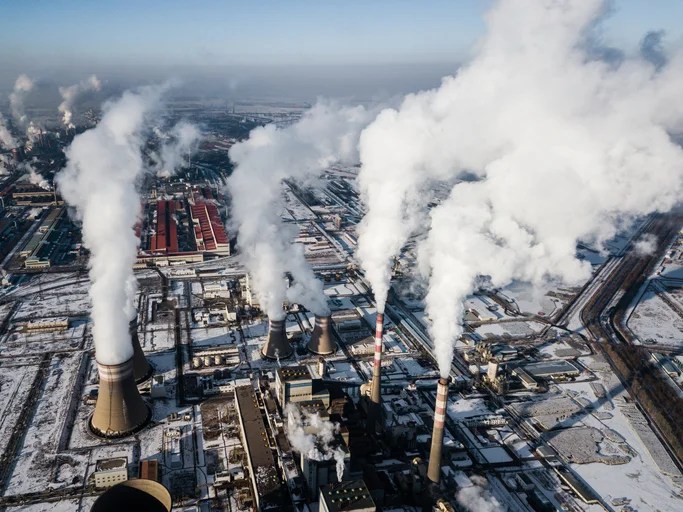
One out of every three tonnes of coal burned in the world is in China, the IEA reports. Hence, Chinese action on coal mining and burning is crucial to the outcome. China diversified its electricity sector in 2024 in line with the country’s long-term trajectory of adding more renewables and nuclear. but it is unclear whether enough non-coal capacity is being added to signal a decline in consumption.
At the moment, both new coal and non-coal capacity are needed to meet electricity demand. Alongside many other economies, electricity use in China is growing at a strong pace due to several factors, such as the electrification of society, increased demand for cooling and increased consumption of IT services such as data centres. Globally, the use of artificial intelligence (AI) is increasing the demand for electricity. This is expected to continue to increase significantly over the coming years. These demands are, of course, underpinned in China by the rising middle class in what was the world’s most populous country until, in 2022, it was overtaken by India, another economy broadly expanding its coal usage. The report underlines that by 2027, coal demand could fluctuate and could be 140 million tonnes higher or lower than forecast. This is due to weather variability affecting the production of renewable energy.
The analysts, while pointing out that coal demand has already peaked and is decreasing in the world’s most advanced economies, say that the demand for coal is still rising in some of the world’s largest emerging economies. In addition to India, the report cites Indonesia and Vietnam.
The IEA analysis points to today’s coal prices, which remain 50% higher than the average between 2017 and 2019. Alongside the all-time high coal production in 2024, the global coal trade is also set to reach a record this year, which is predicted to reach 1.55 billion tonnes. Asia is at the centre of international coal trade, with the largest importing countries being China, India, Japan, Korea and Vietnam, and the most prominent exporters are Indonesia and Australia.
The underlying message of the IEA predicts that global coal usage is experiencing record levels right now, but the long-term trend is to decline as soon as post-2027. The IEA Director of Energy Markets and Security, Keisuke Sadamori, said, “The rapid deployment of clean energy technologies is reshaping the global electricity sector, which accounts for two-thirds of the world’s coal use. As a result, our models show global demand for coal plateauing through 2027, even as electricity consumption rises sharply”.
Conclusion
The law of physics underlines that at some point, coal usage will drop and ultimately end. This, as there, of course, as with all fossil fuels, is a finite amount. However, the world still has an awful lot of coal left that can be mined and burned, so when exactly the decrease happens is still an open question. Many industry experts and policy-makers will most likely take the IEA analysis with a pinch of salt. The fact that they, with confidence, can predict that until 202,7, coal consumption is unlikely to decrease should be a cause for concern and worry for climate-action advocates.
Predictions of what will happen post-2027 face many uncertainties and are more like guesswork. We must remember that we have been here before with IEA and other analysts saying that coal usage had already peaked. One of the most considerable uncertainties is, of course, what future electricity demand looks like. How much electricity is needed for the rapidly expanding digital and IT sector? AI will only grow in significance and adoption, and it is the most electricity-intense digital service there is. The feasibility of scaling renewable energy production to a much greater level than we have seen is a key factor together with creating flexible energy systems that require less base-load power, such as coal. Key factors will be how aggressive policy-makers are in crafting low-carbon policies and to what degree governments insist on implementing them.
Discover more from A greener life, a greener world
Subscribe to get the latest posts sent to your email.
 A greener life, a greener world
1 reply »