By Kate Whiting & Becca Byrne
In 2025, around 20 million barrels per day (mb/d) of crude oil and oil products were passed through the Strait of Hormuz, off the southern coast of Iran, according to the International Energy Agency (IEA) – accounting for around 25% of the world’s seaborne oil trade.
Most of this oil heads to Asia, with China, India, Japan and South Korea the primary buyers, leaving them especially exposed to any disruption.
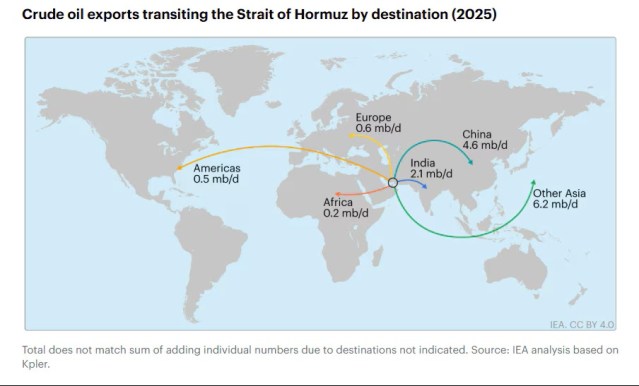
The Strait of Hormuz and the global crude oil trade
But since the conflict in Iran began at the end of February, the Strait has effectively been closed, with hundreds of tankers and thousands of seafarers stuck and global oil prices soaring.
The price of Brent crude – the world’s most important benchmark – topped $106 per barrel on 15 March. Last March Brent futures were trading at $70 per barrel, the IEA reported.
Crude oil is liquid petroleum extracted from the Earth’s crust to either burn for fuel or process into chemical products. In 2025, 34% of global crude oil trade passed through the Strait of Hormuz.
Many of the oil-producing Gulf states, including Iraq, Kuwait, Qatar and Bahrain, rely on the Strait to deliver the majority of their exports, while the UAE and Saudi Arabia have some export routes that do not pass the Strait, the IEA says.
But what about the world’s other crude oil reserves? This interactive chart is based on the latest OPEC Annual Statistical Bulletin and shows crude oil reserves by country.
Mapped: the world’s oil reserves
Spin the planet to see which countries have the biggest proven oil reserves.
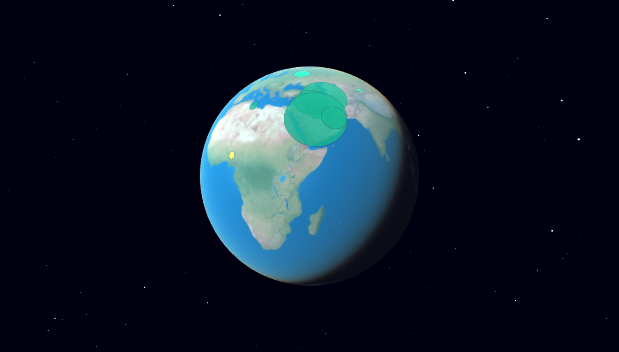
Venezuela has the biggest reserve, with more than 303 billion barrels, followed by Saudi Arabia with more than 267 billion barrels, then Iran with 208 billion barrels, Iraq with 145 billion and the UAE with 113 billion barrels.
Canada officially has the world’s fourth largest reserve – at 163 billion barrels – but it gets the majority of its oil from oil sands, which are not included in the OPEC data.
Geopolitical tensions strengthen the case for the energy transition
The World Economic Forum’s latest Energy Transition Index argues that heightened geopolitical tension in the Middle East has strengthened the case for accelerating the shift to cleaner, more resilient energy systems.
Overall ETI scores – across three dimensions of security, equity and sustainability – ticked up 1.1% in 2025, driven by rising renewables and improved energy equity, but the report warns that progress is still too slow to meet climate goals.
It calls for stable policy, rapid grid and storage upgrades, and much greater clean‑energy investment in developing economies – steps that would gradually reduce the world’s exposure to geopolitical flashpoints like the Strait of Hormuz.
Kate Whiting is a Senior Writer at Forum Stories, World Economic Forum (WEF).
Becca Byrne is a Virtual Designer at Forum Stories, World Economic Forum (WEF).
First published in The World Economic Forum (WEF).
Discover more from A greener life, a greener world
Subscribe to get the latest posts sent to your email.
Categories: Energy, explainer, Geopolitics
 A greener life, a greener world