Oil stocks are surging as crude prices climb, yet demand shifts, market volatility and the global energy transition could make fossil fuel investments increasingly risky.
Oil stocks are surging as crude prices climb, yet demand shifts, market volatility and the global energy transition could make fossil fuel investments increasingly risky.

A Ningxia company was fined RMB 424 million for failing to submit carbon allowances, marking China’s largest penalty in its carbon market.
Vestas achieved record revenues of €18.8 billion in 2025, despite global wind market volatility, with strong onshore performance supporting growth.
Carbon dioxide removal requires an evolved financial architecture for scalability, enabling significant investment to meet global climate goals.

Nigeria faces severe electricity access issues, prompting support for solar solutions through blended finance to promote renewable energy growth.
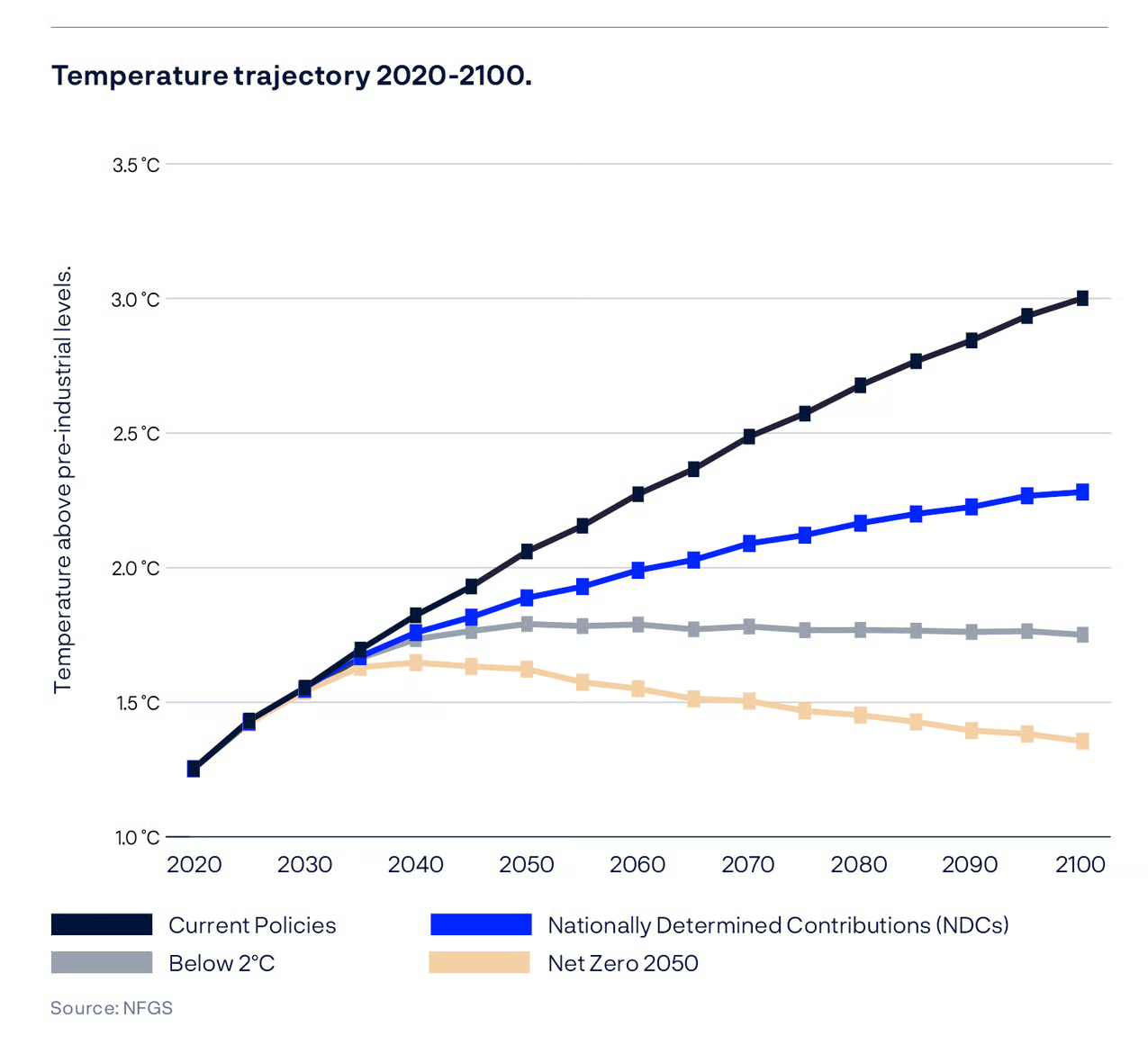
Norway’s sovereign wealth fund pressures portfolio companies toward net-zero emissions by 2050, highlighting climate risk as a financial risk.

Biochar-based carbon dioxide removal is transforming the carbon market, driving demand for reliable credits and enhancing corporate climate strategies.
Vestas experienced a remarkable turnaround in 2024, achieving a 600% profit increase and prioritising quality.

The Tyligulska wind farm in Ukraine receives funding to expand from 114 MW to 500 MW, enhancing energy independence amid war.

Research shows vertical farming, driven by fresh vegetable demand and climate change, is set to grow to $6.46 billion by 2027, employing techniques like hydroponics and addressing arable land declines.
 A greener life, a greener world