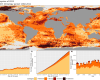
The UN’s World Meteorological Organization issued a dire warning about unprecedented climate impacts in 2023, with record-breaking temperatures and alarming ocean warming, signaling a red alert for escalating climate crisis in 2024.
The UN’s World Meteorological Organization issued a dire warning about unprecedented climate impacts in 2023, with record-breaking temperatures and alarming ocean warming, signaling a red alert for escalating climate crisis in 2024.

Indian farmers are pushing for the legalisation of a historic pricing mechanism that built India’s food security, but the problems they face demand far more.

Bengaluru, also known as Bangalore, faces severe water shortage amidst rapid growth, earning it the nickname ‘India’s Silicon Valley’. The city’s expansion has strained resources, leading to increased water prices and environmental degradation.

In February 2024, data from Copernicus Climate Change Service revealed the world’s warmest January and a 12-month period averaging over 1.5C above pre-industrial levels. Scientists emphasize the urgent need for substantial emissions reductions to reverse this trend. Uncertainty remains about whether 2024 will surpass 2023 in temperature records, emphasizing the critical need for increased global efforts to combat climate change.

London’s Climate Resilience Review, commissioned by Mayor Sadiq Khan, highlights the city’s unpreparedness for climate-fueled risks. The report emphasizes threats to vulnerable communities and the need for increased planning and investment.

Ukraine, Europe’s major wheat producer, faces economic challenges due to extreme weather impacting winter wheat crops. Climate change exacerbates the situation, threatening global food supply.

Cricket faces heat challenges in India, affecting players’ health and performance. Rising temperatures and humidity due to climate change raise concerns about the sport’s future, writes Priyanka Thirumuthy.
Ahead of the COP28 climate summit, UN scientists warn that the world is likely to heat by 3 degrees C this decade, double the target set in the 2015 Paris Agreement. This temperature increase could lead to irreversible changes, such as melting ice sheets and drying rainforests.

Arctic warming and potential Arctic permafrost methane release are primary climate concerns for former UK Chief Scientist David King, who advocates for global reductions in carbon emissions, CO2 removal, and refreezing damaged climate areas.

Ahead of the COP28 climate summit, UN scientists warn of potential ‘tipping points’ causing irreversible environmental damage due to climate change and overconsumption. They stress urgent action to prevent ecosystem collapse and widespread species extinction.
 A greener life, a greener world