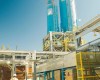
Microsoft’s investment in Fortera’s low-carbon cement technology aims to reduce carbon emissions significantly while meeting growing demand for sustainable materials.
Microsoft’s investment in Fortera’s low-carbon cement technology aims to reduce carbon emissions significantly while meeting growing demand for sustainable materials.
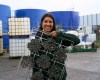
ReefCircular’s artificial reefs in Denmark significantly boost marine biodiversity, attracting diverse species and offering global restoration potential.

The Frontiers Planet Prize incentivizes transformative scientific research to deliver urgent, collaborative solutions for global environmental challenges.

The post discusses gravity’s role in energy storage, highlighting pumped hydro’s dominance and emerging technologies like Energy Vault, which uses heavy blocks instead of water for renewable energy management.
Amazon is investing in nuclear energy projects, specifically Small Modular Reactors (SMRs), to support its net-zero goals, enhance energy capacity, and create job opportunities while promoting carbon-free operations.
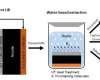
Scientists have developed a new eco-friendly recycling method for lithium-ion batteries using only water and CO2, significantly improving lithium recovery while avoiding harsh chemicals and reducing energy requirements.
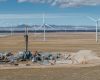
The US utility, Southern California Edison, is set to buy geothermal energy from Fervo Energy, a startup with a groundbreaking drilling technology. This partnership aims to power 350,000 homes with clean energy.
Critics argue the scarcity of lithium for electric mobility may soon change as Natron’s sodium batteries offer viable alternatives.

Sunswap, a sustainable transport refrigeration system, developed the Endurance product to reduce emissions, minimize energy use, and use solar power.
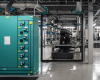
Britain is home to a national supercomputer at the University of Edinburgh, generating significant waste heat. A new trial project will utilize this excess heat by storing it in a disused coal mine and using it to heat nearby homes, potentially heating around 5,000 local homes annually. This innovative approach could be replicated in various locations with flooded mines across Britain.
 A greener life, a greener world