Carbon dioxide removal requires an evolved financial architecture for scalability, enabling significant investment to meet global climate goals.
The world is approaching a positive tipping point towards clean steel. Here’s how to accelerate it

Clean steel is gaining momentum towards commercialization, driven by demand, technology advancements, and supportive policies for decarbonization.
Analysis: BP’s energy U-turn: From ‘Beyond Petroleum’ to fossil fuel expansion

BP has reversed its net-zero ambitions, shifting back to fossil fuels. What’s behind this U-turn, and what does it mean for the energy transition?”
The UK’s last coal plant closes and becomes the first major economy to exit the energy source it started
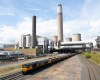
The UK has closed its last coal power plant, ending over 140 years of coal energy, as part of its commitment to achieve net-zero emissions by 2050 and transition to renewable sources.
The UK off track to meet climate targets, new UK government told

The UK is falling short of its net-zero targets, needing urgent action across industries, as the government faces key recommendations.
Analysis: Bolstering Southeast Asia’s clean energy transition
The US assists Southeast Asian nations, including Vietnam, Indonesia, and the Philippines, to achieve their clean energy goals, working with partners like Dat Bike and VinFast. The USAID’s initiatives aim to mobilize billions for regional clean energy projects, enhance renewable energy investments, support sustainable manufacturing, and improve disaster resilience.
Only a fraction of global companies meet UN climate targets

The Net Zero Tracker found that half of the world’s 2000 largest companies aim for net-zero emissions by mid-century, yet only a small fraction meet UN guidelines. Inadequate targets and rising contention create a battleground ahead of the upcoming COP28 UN climate summit.
Analysis: The UK governments love-letter to the fossil fuel industry

As the climate crisis bites, the UK wants to go on a fossil fuel bonanza.
Analysis: What is carbon-neutral milk?

Milk and meat brands are turning to climate labels like “carbon neutral” and “net zero” to boost sales. But what do these terms actually mean?
Romania’s race to boost wind energy capacity

Romania’s wind power capacity will increase by 609 MW through three projects, reflecting a shift towards renewable energy and energy independence.
 A greener life, a greener world