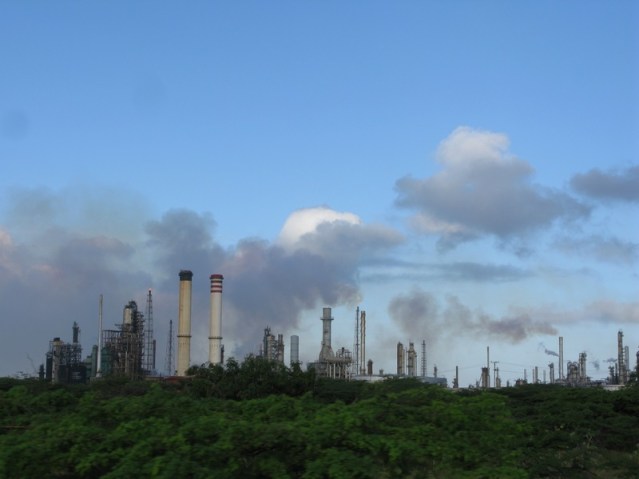
Barely days into 2026, news broke that the US had launched a military attack on Venezuela, a South American country whose economy remains heavily dependent on crude oil production.
The US government claimed it had carried out successful strikes and removed Venezuela’s President Nicolás Maduro and his wife, who it said had been transferred to the US.
The Trump Administration made its case for actions that they removed a dictator who is operating a drug cartel that is causing significant damage to the US and its citizens.
Grains of truth
As is often the case with statements made by the Trump Administration, elements of the claim align with observable realities, while others remain unsubstantiated.
Key facts about Nicolás Maduro
- Born: 23 November 1962, Caracas, Venezuela
- Early career: Bus driver and union leader in the 1980s
- Political entry: Elected to the National Assembly in 1999; served in Chávez government as Foreign Minister and Vice President
- President: Assumed office on 19 April 2013, following Hugo Chávez’s death
- Re-election: Controversial 2018 and 2024 elections; widely disputed results internationally
- Political affiliation: United Socialist Party of Venezuela (PSUV)
It would be hard to argue that Maduro is not a dictator, especially in the wake of non governmental sources including neutral observes saying the 2024 presidential election was won by the opposition. But Maduro and his government disputed that and instead shared information showing that Maduro has won and he stayed in power.
Subsequently, governments, international non-governmental observes like the United Nations (UN), and media organisations claimed that the Maduro governments had fixed the results and put in place measures preventing critics of the government from voting.
However, there has been no publicly available, credible evidence to substantiate claims that Maduro was personally leading a state-organised drug cartel.
This makes the justifications presented by the US government — centred on security, democracy and regional stability — deserving of closer scrutiny.
Not because such concerns are necessarily irrelevant, but because they do not fully explain why Venezuela continues to command strategic urgency in Washington.
Oil – the elephant in the room
In the coming days and weeks, all depending on how the situation develops, we can expect politicians, activists and climate advocates making a variety of different claims as the reason for the US attacking Venezuela, and in that context, it is impossible to ignore the role oil plays.
Venezuela’s oil reserves and production
Venezuela holds the world’s largest proven oil reserves. Its energy system may be broken, its production a fraction of what it once was, but the country’s resource endowment has not disappeared.
Oil still shapes global power
In an era often described as “post-oil”, Venezuela remains a reminder that fossil fuels continue to shape global power — particularly during a fragile and uneven energy transition.
This is particularly relevant given that, under Trump, the US government has moved away from policies aimed at accelerating a transition from fossil fuels, and the bonds between US fossil fuel executives and the Trump Administration have only become even tighter.
Make your prediction
How do you think key climate and energy stories will unfold in 2026? Take part in our prediction game and see how your forecasts compare with others.
Oil and US strategic power
As previously reported, the administration has also moved to halt offshore wind projects that had already received approval — actions that legal experts argue violate existing US law.
Buoyed by the support from the US government, several fossil fuel and chemical giants are dropping or at least significantly scaling back any plans to transition from fossil fuels.
The accusation and the context
Caracas has accused the US of seeking to seize control of Venezuela’s natural resources — a claim Washington rejects. On its own, such an accusation might be dismissed as political rhetoric from an embattled government. But it gains weight when placed in a historical and material context, and when juxtaposed with unusually explicit statements from senior US figures.
Trump and the Venezuelan oil sector
Trump has himself said that the US would be “very involved” in Venezuela’s oil industry. That bluntness matters.
Had Trump dismissed any links to the Venezuelan oil sector, it would have been much harder to make such an argument. Especially as previous US administrations, when engaging in military actions in oil-rich countries, typically insisted that oil was irrelevant to their military or diplomatic decisions, even when outcomes suggested otherwise.
Trump’s rhetoric dispenses with much of that ambiguity, collapsing the distance between security justification and economic consequence.
This makes it, of course, not a given that the main objective of the military actions was to seize control of Venezuela’s oil assets.
Make your prediction
How do you think key climate and energy stories will unfold in 2026? Take part in our prediction game and see how your forecasts compare with others.
Yet Trump’s mention of oil, and even indirect suggestions that assets could be handed to US companies, make energy motivations harder to deny
Against the backdrop of an escalating US–China trade war, it is also plausible that Venezuela’s role as a major oil supplier to China factors into Washington’s strategic calculations.
This interpretation is reinforced by a broader pattern in Trump’s foreign policy rhetoric, including previous suggestions — widely criticised — regarding US control over territories such as Panama and Greenland.
Why Venezuela still matters in a world moving away from oil
Despite the significant progress of renewables and the milestones reached year on year, transport is shifting from petrol and diesel-driven cars to electric vehicles (EVs), crude oil still has a stranglehold on our societies.
Global oil production trends
Despite a dip during the COVID-19 pandemic, production has rebounded to record levels. Since the early 2000s, global oil output has increased significantly, equivalent to an estimated 10 TWh of additional annual energy output, or roughly 24%.
Snapshot
- Production increase (2000s–present): +24% (~10 TWh additional annual energy)
- Drivers: population growth, digitalisation, AI, expanding middle class
- Venezuelan heavy crude: uniquely suited to some US refineries
- Geopolitical note: marginal barrels can influence prices, alliances, leverage
There are several reasons for this, such as a growing global population, increased energy demand as our societies become more digital and AI-driven, and the growth of the world’s middle class.
Venezuelan crude and US refineries
Venezuelan crude is heavy, sulphur-rich and technically challenging — precisely the kind of oil that certain refineries, particularly along the US Gulf Coast, were built to process.
When Venezuelan supply collapsed under sanctions and infrastructure decay, those refineries did not stop needing heavy crude. They turned instead to other producers, often at higher cost and with new geopolitical dependencies.
Venezuela’s oil at a glance
- Proven reserves: 303 billion barrels – largest in the world
- Current production: ~1.0–1.2 million bpd – fraction of potential
- US Gulf Coast refineries: built for heavy, sulphur-rich crude
- Strategic value: influences global prices, alliances, leverage
At the same time, global oil markets remain tight and politically sensitive. Even marginal barrels can influence prices, alliances and leverage. In this context, Venezuela represents not just potential supply, but strategic optionality — the ability to shape future access rather than secure immediate production.
Oil’s value today lies as much in control and influence as in extraction.
What happens next?
Of course, a lot of the US government’s true motive for invading Venezuela is speculation; the complexity of the global energy system, as well as the oil industry, is not.
Next steps for US involvement
The next few days and weeks will be crucial.
If the Trump Administration continues its presence in the country, and if they actively involve themselves in deciding the next government in the country as well as managing the country’s oil industry and handing oil assets to US companies, then we can be a lot clearer about the true motive, and we would then also move further in line with it being historic and unprecedented.
Anders Lorenzen is the founding Editor of A greener life, a greener world.
Make your prediction
How do you think key climate and energy stories will unfold in 2026? Take part in our prediction game and see how your forecasts compare with others.
Discover more from A greener life, a greener world
Subscribe to get the latest posts sent to your email.
Categories: Analysis, conflicts, Energy, Geopolitics, International Politics, US politics
 A greener life, a greener world
5 replies »