By Jeanfreddy Gutiérrez Torres
As the US powers ahead with its plans to recover Latin America’s ‘oil El Dorado’, I explore Venezuela’s environmental and geopolitical outlook.
Uninvestable”. That was the verdict on Venezuelan oil delivered by Exxon’s CEO, Darren Woods, earlier this month. He was speaking at the White House with the US president, Donald Trump and representatives from 17 oil companies.
Nevertheless, following the removal of Venezuela’s president, Nicolás Maduro, Trump plans to revive the country’s flailing industry. He says a USD 100 billion investment will be geared towards resurrecting the “oil El Dorado” of the 1990s.
He has takers. After Woods’ White House comments, the US energy secretary Chris Wright said the US oil and gas company Chevron, the UK’s Shell, Spain’s Repsol and Italy’s Eni were all willing to “immediately increase” investment in Venezuela. He added that a dozen other companies were also interested, while dismissing the doubts expressed by Exxon and ConocoPhillips.
Any company following Trump to the country will have to deal with uncertainty – and the estimated USD 1 billion cost of the failed nationalisations enacted by Venezuela’s former president, Hugo Chávez. According to Venezuela’s Centre for the Dissemination of Economic Information (Cedice), the government expropriated several thousand between 1999 and 2019.
Independent experts estimate the bill for success will reach USD 180 billion – nearly double that announced by Trump.
On the other hand, some companies will be encouraged by successful gas operations in Venezuela. For example, the Perla (Cardón IV) field, which covers the entire domestic demand for gas, is operated by Repsol. And Chevron has been able to continue operating in the country, despite a barrage of economic sanctions initiated by the US under Trump in 2017.
Demands and first legal changes
Trump has claimed the US could be making money from Venezuelan oil in 18 months. Venezuelan oil experts say this will require a fiscal and contractual framework that does not exist today, and a decade of “arduous democratic work”. The economist José Manuel Puente estimates it will require an investment of USD 180 billion and 15 years of institutional work.
Patrick Pouyanné, CEO of the French oil company TotalEnergies, thinks similarly. Without a legal framework that guarantees rights, he says, it would be too expensive and slow to return to production of three million barrels a day.
Last week, Venezuela’s interim government responded by announcing that the acting president, Delcy Rodríguez, will send a new Hydrocarbons Law to the national assembly, as well as another for streamlining procedures.
The interim government’s strategy is to further “production sharing contracts”. These would allow foreign companies to recover their investments by selling a portion of the extracted crude oil.
However, interested foreign oil companies are pushing for greater changes. Reuters has reported that they are seeking to reduce the tax burden by returning to a royalty payment model. They also want the right to sell the majority of the oil by gaining access to export infrastructure.
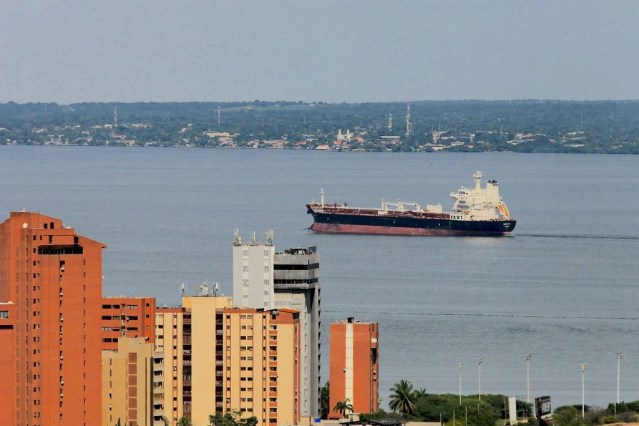
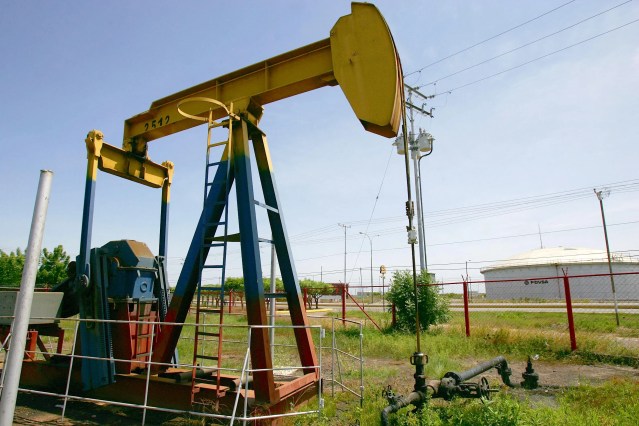
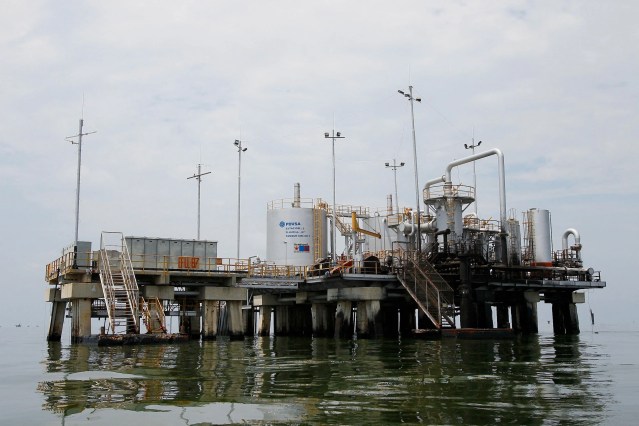
This infrastructure, currently dilapidated and faulty, includes thousands of kilometres of oil and gas pipelines, 16 shipping terminals, 153 gas compression plants and six large oil refineries.
The economy responds
Following the capture of Maduro, the Caracas stock market benefited from a 124% rise, accompanied by a fall in the black market exchange rate.
This has been attributed to news that the first sale of Venezuelan oil through the US will generate USD 330 million. This will go to five private Venezuelan banks through the Central Bank of Venezuela.
To facilitate this, Rodríguez has announced the creation of two sovereign funds. One will raise the salaries of public employees; the other will address Venezuela’s frequently deficient public services.
The minimum wage in Venezuela is VES 130 (USD 0.38) per month. In May 2025, Maduro decreed a “minimum comprehensive indexed income” for public workers of USD 160 per month. This was to be issued through special bonds paid in Venezuelan bolívars at the official exchange rate. In the private sector, the average income was USD 237 per month at the beginning of 2025.
The interim government has announced a host of other changes, including the modification of eight legal codes.
For her part, the acting president has announced reforms to laws on electricity services and industrial intellectual property. She has also made reference to legislation on agreed prices and socio-economic rights, which aim to maintain a mixed economic model that combines openness with state involvement.
Whether these reforms will bring the stability US oil companies need to safely (and profitably) operate remains to be seen.
Logistics and corruption
Venezuelan oil is plentiful, but it is also of poor quality. The estimated 300 billion barrels in the reserves of the Orinoco belt – the largest oil deposit in the world – consist of heavy and extra-heavy crude oil. These are the most difficult to extract, transport and refine. This has raised doubts among experts, who point to the need for maritime insurance, as well as the risks attached to the poor condition of the country’s pipelines and other facilities. Whether this oil will be refined in Venezuela or shipped to refineries in the United States is another uncertainty.
As Patrick Galey, head of fossil fuel investigations for the climate justice campaign group Global Witness, wrote earlier this month: “You would have to be forced at gunpoint to try to make money from [Venezuelan oil].”
Then there are security concerns. Despite Trump’s promise of protection for oil companies, his administration has advised its citizens to leave the country over Chavista militia kidnappingfears. The administration is considering the use of private companies to secure oil facilities.
It is still difficult to know whether a transition to democracy is possible and when elections can be held.
As things stand, Venezuela continues to be run by the same government that has accumulated dozens of corruption cases. For example, a scandal implicating executives of PDVSA (Venezuela’s state oil company) in illegal activities related to cryptocurrencies led to USD 16 billion in losses. Meanwhile, a railway network funded using billions of dollars worth of Chinese investment has never been completed.
The role of China
Venezuela has played a key role in the story of Chinese investment in South America, becoming its biggest debtor. Following the actions of the US government, Venezuela finds itself once again split between superpowers.
Venezuelan imports account for just 3% of China’s total crude oil purchases, according to an analysis published this month by the Centre on Global Energy Policy – a think-tank based at Columbia University in the US. But the analysis also highlights the importance of these imports to China’s “teapot refineries”, which specialise in processing unconventional crude oil.
Venezuela’s debt to China is estimated to be between $10 billion and $19 billion. This is being paid off slowly with crude oil shipments, prompting Chinese officials to approach their Venezuelan and US counterparts to try to obtain payment guarantees.
Some analysts have suggested that a stabilisation of Venezuela’s economic situation and a lifting of US sanctions could actually increase the chances of Chinese development banks recouping their investments.
The environmental issue, pending
The full environmental impacts of a Venezuelan oil recovery are unclear. While it would not involve exploitation in new protected areas or Indigenous territories, significant concerns remain.
These include the tens of millions of dollars’ worth of methane gas that leaks from damaged pipelines, as reported by Bloomberg Green. And more methane gas is lost through flaring, for which Venezuela ranks fifth worldwide.
Some onlookers have suggested that greater transparency and better technology could improve this situation.
This view is not shared by Juan Carlos Sánchez, co-winner of the 2007 Nobel Peace Prize for his work as an Intergovernmental Panel on Climate Change author. Sánchez, who also worked at PDVSA for 21 years, told me he does not foresee a positive environmental scenario: Trump promotes climate denialism, while the track records of oil companies operating in other Latin American countries are littered with environmental damage.
“In my experience, when oil companies decide to cut costs to increase profits, the budgets that are most affected are environmental projects,” said Sánchez. Moreover, he adds, Venezuela lags considerably in terms of institutional frameworks regarding climate change. “Only a Venezuelan government that is genuinely interested in environmental issues and policies will be able to demand environmental safeguards in the future.”
First published in Dialogue Earth.
Discover more from A greener life, a greener world
Subscribe to get the latest posts sent to your email.
Categories: Analysis, China, Energy, Geopolitics, South America, US politics
 A greener life, a greener world