Brazil’s oil industry causes significant pollution, harming marine environments and sparking criticism of President Lula’s fossil fuel policies.
Europe’s largest oil and gas producer – an unlikely climate ally amidst Trump’s rallying against the clean energy economy
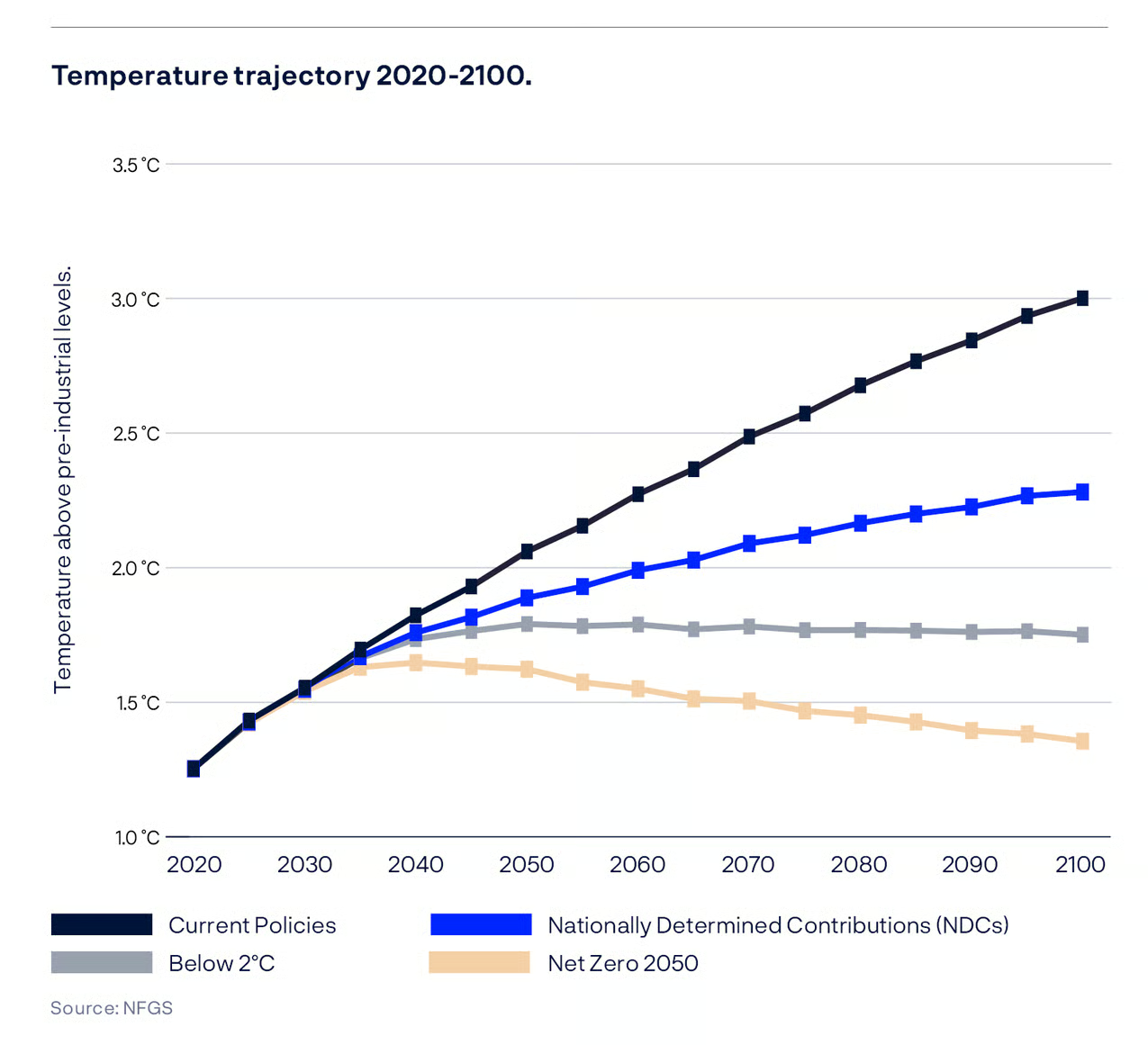
Norway’s sovereign wealth fund pressures portfolio companies toward net-zero emissions by 2050, highlighting climate risk as a financial risk.
Analysis: The avalanche in Greenlandic politics could have grave environmental and climate consequences

Greenland’s recent elections resulted in a pro-business coalition focused on economic development, increasing interest in rare-earth minerals and potential oil exploration.
Analysis: BP’s energy U-turn: From ‘Beyond Petroleum’ to fossil fuel expansion

BP has reversed its net-zero ambitions, shifting back to fossil fuels. What’s behind this U-turn, and what does it mean for the energy transition?”
Trump has started the attack on climate and clean energy policies
Donald Trump, as the 47th US President, prioritizes reversing Biden’s climate agenda, exiting the Paris Agreement, increasing fossil fuel production, and deregulating energy policies, despite climate concerns from environmental groups.
Trump’s Greenland interest unmasks his hidden climate admission
Trump’s aggressive pursuit of Greenland is driven by strategic interests, economic opportunities, and climate change impacts on Arctic access.
China’s oil demand could peak in 2025

China’s oil demand is forecasted to peak at 770 million tonnes in 2025 before declining to 240 million tonnes by 2060, driven by shifts in transportation and energy consumption habits.
COP29: Hosts Azerbaijan do not think fossil fuels are a problem
The selection of Azerbaijan to host COP29 raises concerns over its fossil fuel agenda, conflicts of interest in leadership, and insufficient climate targets, amidst criticism from world leaders regarding its emissions.
Fund built on the wealth of fossil fuels is targeting large renewable energy investments

Norway’s Sovereign Wealth Fund, valued at $1.71 trillion, plans large investments in renewable energy. It commits $1.01 billion to Copenhagen Infrastructure Partners for offshore and onshore wind, solar, and grid projects. Despite this, Norway’s oil and gas industry has not pledged to scale back extractions, drawing criticism.
Despite the anti-Russia rhetoric, Europe continue to purchase Russian gas en masse
Western countries pledged to stop buying Russian oil and gas after the Ukraine invasion, but Europe still heavily depends on Russian gas. Germany reduced reliance, but Austria remains the largest consumer. The UN emphasizes transitioning to clean energy.
 A greener life, a greener world