If the last few years indicate future trends in a warming world, experts have been arguing why we need to rethink how and what kind of grains we grow.
Fonio’s promising climate-resistant grain properties
Outside the African continent, a relatively unknown climate-resistant grain, fonio, is attracting global interest.
Could fonio reverse the global threat of decreasing cereal yields?
Climate impacts in the world’s wealthiest economies have seen a drastic decrease in cereal yields. This is true in countries with the latest technological farming systems and adequate measures to deal with extreme weather events.
Developing drought-resistant grain varieties
As a result of the increasing concerns around decreasing yields, research has increased in developing drought-resistant wheat and other cereal grains.
Ancient grains to the rescue
And there is an argument about whether we need a complete overhaul of how and what grains we cultivate.
Sometimes, that means going back to the past.
As a result, the idea of using so-called ancient grains has grown in popularity recently.
What is fonio and why is it important?
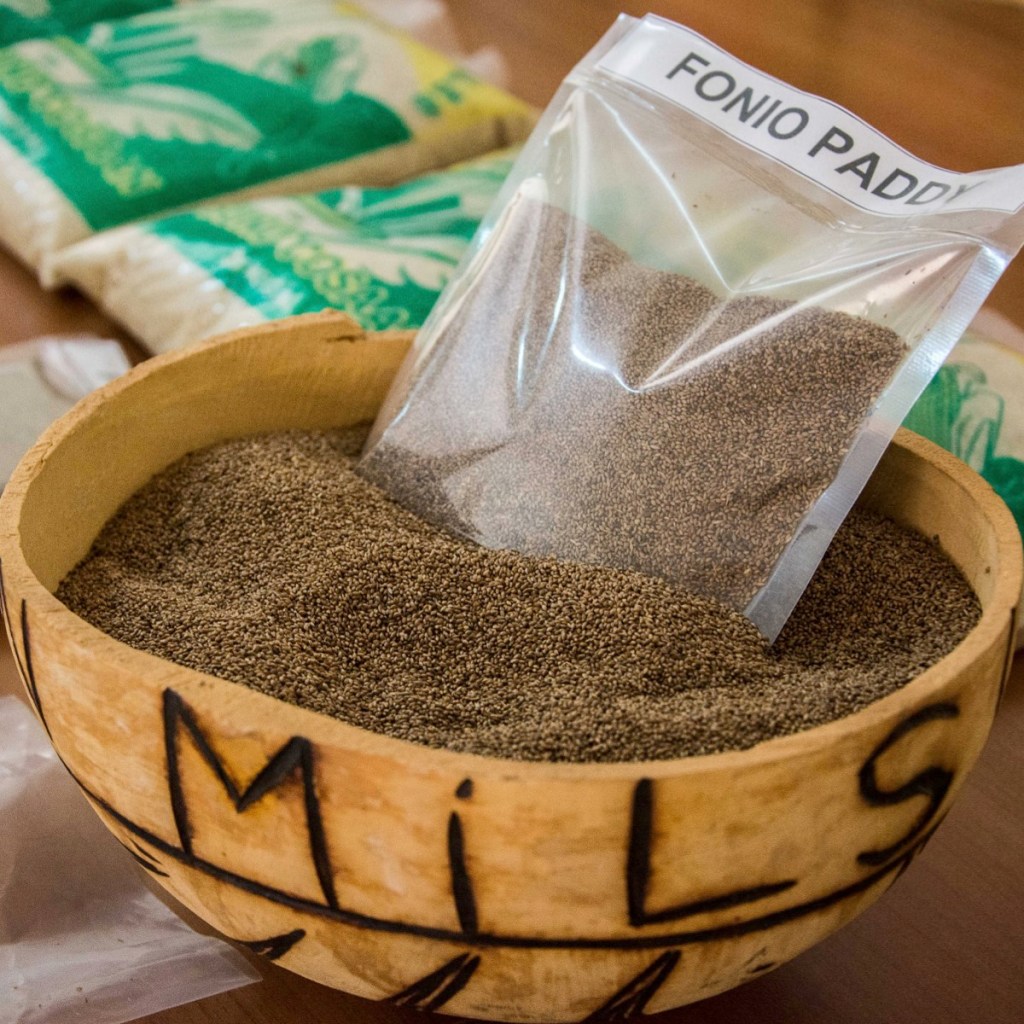
One such ancient grain is Fonio, which is predominantly prevalent in the dry regions of Africa. The drought-resistant crop is ideal in those regions because Fonio not only handles the dry conditions with ease but also rejuvenates the soil as it grows.
Global interest in fonio: A growing trend
Fonio has been consumed in many African countries for more than 5,000 years.
But what is changing now is that as the rest of the world discovers its useful properties.
Surging global interest in fonio
Several global companies are looking to organise production methods in the Western world.
Probably the best grain in the world?
Earlier this year, Carlsberg, the famous Danish brewery known by the marketing catchphrase ‘probably the best beer in the world,’ announced it had brewed a beer with 100% Fonio grains.
Fonio’s nutritional profile: Small grain, big benefits
And it is not only the global brewery that is excited about the properties of the grain that has been labelled as a ‘superfood’. Aside from the fact that it could hold a lot of answers in a climate-heated world, it is a high and good source of protein, fibre, iron, zinc, and a series of amino acids.
Calcium and vitamin C boost
It has ten times the calcium of wheat and is the only grain with high levels of vitamin C.
The philanthropist Bill Gates has been praising it on his Gates Notes blog.
How fonio supports climate resilience
Unlike other more predominantly Western ancient grains that have gone out of fashion or become extinct and are only recently becoming popular, this is not the case with Fonio. The crop thrives in the driest regions of the African continent, such as the Sahel and the Sahara desert.
The role of fonio in African agriculture
In terms of texture and appearance, Fonio most resembles couscous and quinoa. Still, it has many uses, such as porridge, bread, and other baked goods, beer production, smoothies, and traditional African dishes. It is also a good gluten-free alternative. Fonio is a variety of millet grains.
Anders Lorenzen is the founding Editor of A greener life, a greener world.
Discover more from A greener life, a greener world
Subscribe to get the latest posts sent to your email.
Categories: Africa, Agriculture, Anders Lorenzen, climate change, food, impacts, Weather
 A greener life, a greener world
4 replies »