“Probably the best discovery ever made”.
If Carlsberg made advertisements for its scientific work, that is probably how it would read.
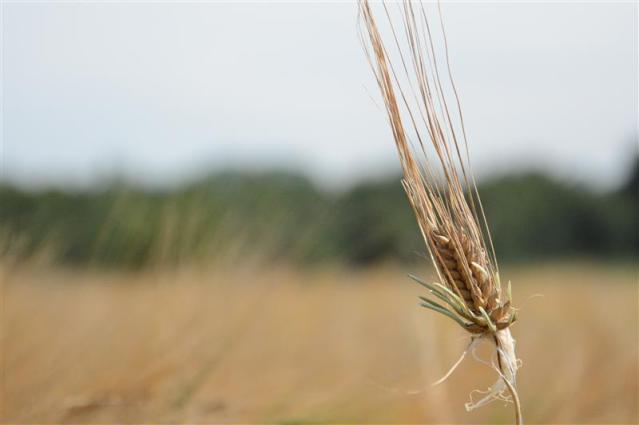
The Carlsberg Group, the company behind the world-famous Carlsberg beer, have unveiled what they describe as a groundbreaking scientific discovery. The Danish company’s research body says its discovery, focused on preventing early sprouting in cereal crops, could be pivotal in safeguarding food crops against climate impacts and preventing yield losses.
The breakthrough by the scientists at the Carlsberg Research Laboratory, part of the Carlsberg Group, has been published and peer-reviewed in one of the world’s most renowned academic journals, Science, in early November.
Cereal’s cops challenge in a warming climate
Due to climate impacts, the weather is becoming increasingly unpredictable and volatile, causing a major headache for farmers, and many are forced to make the decision to abandon farming.
Billion-dollar losses for cereal crops such as barley, wheat and rice due to premature sprouting are becoming a more frequent occurrence and lead to reduced grain quality, as well as threatening food security.
When grains germinate before harvest, they often fail quality requirements in downstream industrial processes and are more likely to succumb to spoilage, mould as well and fungal contamination; often, they are not even suitable as animal feed.
The barley scientific breakthrough
The researchers uncovered how complex the genetics of just one single gene, MKK3, controls the seed dormancy and sprouting risk in barley.
This discovery has revealed new ways to breed crops so they are resilient to both climate extremes as well as being suited to a diverse set of agricultural needs.
The scientists globally mapped to illustrate the worldwide distribution of these gene variants and highlighted the regions most at risk from early sprouting.
Additionally, the study shows to what a degree targeted breeding can help the balance between crop performance and resilience.
A breakthrough bigger than beer
The Vice President and the Head of Carlsberg Research Laboratory, Birgitte Skadhauge, explained that they’re are making this research available to everyone, hence they published it in, Science, and are inviting the global community to build on their research and speed up the process to secure the future of food, and added, “This breakthrough is bigger than beer – it’s about a better tomorrow for everyone.”
Adding to this, Christoph Dockter, Head of Cereal Crop Development at the Carlsberg Research Laboratory, said: “Our work shows how centuries of farming and climate adaptation have shaped the genetic landscape of this vital crop and provides a roadmap for breeders to balance dormancy and sprouting risks.”
Carlsberg A/S was founded in 1847 by J.C. Jacobsen and was later renamed to the Carlsberg Group. The Carlsberg Research Laboratory was founded in 1875, and in 1909, invented the pH scale and won the Nobel Prize for click chemistry in 2022 for creating a technology to breed climate-resilient crops for the future.
In addition to the Carlsberg beer, through have also acquired other major beer brands, the most notable including the other Danish major beer, Tuborg, Kronenbourg 1864, Somersby and Holsten.
Discover more from A greener life, a greener world
Subscribe to get the latest posts sent to your email.
Categories: Agriculture, innovation, science
 A greener life, a greener world