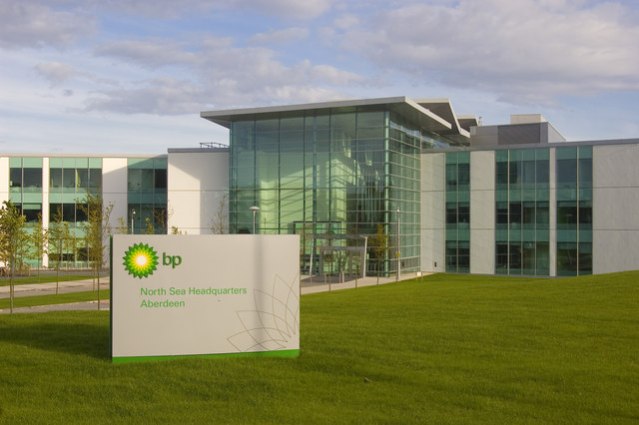
Shareholders at the oil and gas giant reject the move to depart from climate responsibilities.
The oil and gas giant has been dealt a significant blow after shareholders staged a major revolt against the company’s board over climate strategy.
The revolt included large institutional investors who voted against proposals to revoke key climate commitments, reinforcing continued backing for Paris alignment and climate disclosure.
The rejected proposals sought to remove shareholder resolutions adopted in 2015 and 2019, which committed BP to enhanced climate reporting and strategic alignment with global climate goals.
The outcome suggests that, despite a broader strategic shift at the company, investors remain reluctant to support any rollback of climate-related disclosures or governance.
The vote saw 18% oppose the chair and 25% back a climate risk resolution—signalling growing investor scrutiny of oil and gas strategy.
BP’s 2026 AGM – key takeaways
- Shareholders rejected proposals to revoke 2015 and 2019 climate commitments
- 18% of shareholders voted against chair Albert Manifold
- 25% backed a long-term value and climate risk resolution
- Investors reaffirmed support for Paris alignment and climate disclosure
Shareholder dissent extends beyond the headline vote
Analysis shared with A greener life, a greener world by Hargreaves Lansdown (HG) indicates that support for climate transparency remains firmly embedded across BP’s shareholder base.
Joshua Sherrard-Bewhay, ESG analyst at the firm, said the vote shows “appetite is still strong for Paris alignment and climate disclosures”.
Growing shareholder dissent at board level
Around 18% of shareholders opposed the re-election of BP chair Albert Manifold, with concerns raised over the exclusion of a climate resolution from the 2026 ballot. Although he will remain as BP’s chair, Manifold, who has served less than a year in the role, suffered a major vote of no confidence and will not be able to carry out the resolutions that were defeated by the majority.
The dissenting shareholders include no other than Legal & General Investment Management (LGIM), the largest asset manager in the UK, which said they would vote against Manifold and oppose BP’s plans to cut back on climate reporting.
BP’s climate strategy under scrutiny
In the run-up to the AGM, Manifold was heavily criticised for putting forward a resolution that would dilute BP’s climate disclosures, as well as for blocking a resolution that called on the company to explain how its pursuit of rising oil and gas production aligned with a world moving away from fossil fuels, put forward by activist shareholders at the campaign group Follow This.
Approximately 25% of investors backed a resolution from the Australasian Centre for Corporate Responsibility (ACCR), calling for clearer disclosure on how oil and gas exploration can generate long-term value in a scenario of declining demand.
Strategy shift under scrutiny
The vote comes amid a period of strategic turbulence for BP.
Under former CEO Bernard Looney, the company positioned itself at the forefront of oil major net-zero commitments. However, subsequent leadership changes have altered that trajectory.
Murray Auchincloss, who succeeded Looney, was later replaced by Meg O’Neill in April 2026, following her move from Woodside Energy.
This leadership transition has coincided with a recalibration of BP’s strategy, including a renewed emphasis on hydrocarbons and petrochemicals, prompting concern among some investors over the company’s long-term positioning.
Retail investors accept oil and gas but demand accountability
Broad survey data from HG highlights a more nuanced investor stance. While most respondents said they are comfortable investing in oil and gas, 35% want stronger prioritisation of climate engagement.
This balance—continued exposure to fossil fuels alongside expectations of robust climate governance—helps explain the voting outcome.
Investors are not withdrawing support from the sector, but they expect the company they place their funds in to demonstrate accountability and transparency, with clear signals that risk disclosure and credible transition planning remain essential for investors.
Investor oil and gas sentiments
- Satisfaction with continued exposure to oil and gas
- Strong demand for climate risk transparency and disclosure
- Expectation of credible long-term transition strategies
- Increased focus on shareholder value in a declining fossil fuel scenario
What does this mean for BP and the wider oil and gas sector
For BP, the message is clear: strategic flexibility does not extend to abandoning climate accountability.
The vote reinforces that a significant portion of shareholders do not accept a departure from net-zero and climate responsibilities, as many oil and gas companies have done, even in light of evolving market conditions and corporate strategies.
More broadly, the result may act as a warning to other energy majors. Especially in the wake of the current energy crisis and the exposed risks for fossil fuel assets, efforts to dilute or reverse climate commitments risk triggering investor resistance, particularly where they undermine transparency or long-term value creation in a decarbonising world.
Anders Lorenzen is the founding Editor of A greener life, a greener world.
Discover more from A greener life, a greener world
Subscribe to get the latest posts sent to your email.
Categories: climate change, Energy, finance, investments
 A greener life, a greener world