By Sangeeta Waldron
When I saw the images coming out of Nepal, I gasped, not only at the scale of the disaster, but because this is a region I know.
I was reacting to the news of the fatal flash floods and landslides in Nepal’s remote Himalayan communities.
I have lived in the lower ranges of the Himalayas in India, among communities shaped by the same mountains, rivers and monsoons that connect millions of people across South Asia.
The casualty figures are changing rapidly. As I write, media reports suggest that the death toll across Nepal and China has reached 1,400, and more than 5,000 remain missing.
Families in Nepal and China are waiting desperately for news of loved ones, alongside families around the world.
A disaster for communities, cultures and faiths
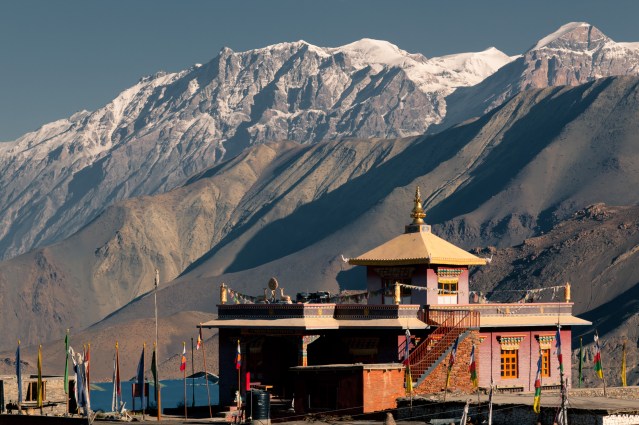
While this might seem to be a remote and distant place, the region is an intersection of international pilgrimage destinations. The floods affected routes to Mount Kailash, which is sacred to Hindus, Buddhists, Jains and followers of the Bon tradition. For Hindus, it is regarded as the home of Lord Shiva and Parvati.
This is not simply a disaster confined by national borders. It has touched communities, cultures and faiths across the region and further afield.
The Himalayas connect the region geographically, environmentally and culturally. What happens in Nepal resonates across northern India, Pakistan, Bhutan and beyond.
Having lived in the lower ranges of the Himalayas, I understand that the weather is not merely a backdrop to everyday life. The arrival of the monsoons affects how people travel, work and plan their days. Heavy rain can wipe away familiar roads, changing landscapes at extraordinary speed.
The rapidly altering weather patterns in the Himalayan region
Communities here have always adapted to the patterns of the natural world. What is changing now is the intensity, frequency and unpredictability of those patterns. This personal connection was one of the reasons I wanted South Asian voices to be represented in my book, What Will Your Legacy Be? – Global Conversations With Change Makers About The Climate Crisis.
For the book, I interviewed 36 people from around the world – including scientists, researchers, activists, Indigenous leaders, and sustainability experts – to understand not only what the climate crisis is doing to the planet, but what it means to people’s lives and livelihoods.
Across these conversations, one message emerged repeatedly: the people who have contributed least to the climate crisis are often experiencing its consequences first and most severely. Yet these communities are not without knowledge, agency or solutions. What they don’t have is fair access to the finance, technology and political influence required to put those solutions into practice.
One conversation that has returned to me, as I watched the devastation in Nepal, was with Nepalese agricultural sustainability researcher Shristi Adhikari, who has worked directly with apple farmers in Mustang on climate-smart agriculture and has been recognised by the UN Food and Agriculture Organisation through its Local Heroes initiative. She is the co-author of published research into climate change and apple production in Lower Mustang.
How climate change is already impacting communities in Nepal
When I interviewed Shristi in September 2023, she described what she had witnessed first-hand in Mustang. Changing temperatures and irregular rainfall were already affecting crops and threatening the communities who depended upon them. Families were dealing not with one isolated emergency, but with recurring cycles of floods, landslides and droughts. Women were particularly exposed to climate disasters; the FAO estimates that women constitute around 70% of Nepal’s agricultural workforce.
Shristi Adhikari said:
I found that the farmers were facing lots of challenges due to changes in the climate, from rising temperatures to irregular rainfall. Every year there was something, from flooding and landslides to droughts. In fact, about a month ago, half of the houses were swept away because of the floods…
For the farming families that Shristi met, climate change was not an abstract prediction or a crisis waiting somewhere in the future. It was already present, in damaged homes, failed harvests and reduced incomes.
Scientists are still investigating why the glacier collapsed and the chain of events that followed. The event was so powerful that it generated seismic signals equivalent to a magnitude 5.2 event. It would therefore be wrong to attribute this particular disaster solely to climate change before that work is complete. But the wider transformation of the Himalayan environment is no longer in doubt.
Things have been rapidly changing here for decades, but now it is difficult to ignore. Rising temperatures, retreating glaciers and increasingly intense rainfall are compounding climate-related hazards across the region. The Hindu Kush Himalaya’s glaciers are now losing ice at twice the rate recorded before 2000.
Research published in March by the International Centre for Integrated Mountain Development found that monitored glaciers had lost as much as 27 metres of ice thickness since 1975.
This is not only a mountain crisis. Nearly two billion people downstream depend on meltwater from what are often called Asia’s “water towers”.
Climate injustice
The contrast between responsibility and consequence could hardly be starker. According to the World Bank Group, Nepal contributes only around 0.1% of global greenhouse-gas emissions, yet it is being forced to absorb immense human and economic losses from a crisis it did almost nothing to create.
This is climate injustice in its starkest form. The greatest historical emitters have a responsibility not only to reduce their emissions, but to provide accessible finance for adaptation, recovery and climate-resilient infrastructure.
While the scale of the disaster is overwhelming, the solutions are not beyond our reach. What is required now is a major expansion of glacier and high-altitude monitoring, accompanied by sustained investment in locally led climate adaptation.
Nepal needs international support
Nepal should not be expected to adapt alone. Its national institutions and local communities need access to the finance, technology and infrastructure required to strengthen the work already taking place. Real-time monitoring of rivers, weather systems and high-altitude conditions could help identify flash floods and emerging glacial hazards earlier. Mobile warnings must be supported by sirens, local radio and properly resourced community emergency teams so that alerts can still reach people when electricity and communications networks fail.
These hazards do not respect borders, and neither should the data needed to anticipate them. Countries across the Himalayan region must share hydrological, meteorological and cryosphere data to improve forecasting. International partners can also share appropriate technology and experience, including lessons from countries such as Japan, while ensuring that any systems are designed around Nepal’s geography and the knowledge of its communities.
Farming communities need greater support to adapt through crop diversification, water-efficient irrigation and varieties suited to changing mountain conditions. Locally appropriate measures such as catchment ponds, contour trenches and slope vegetation can help retain water, stabilise vulnerable land and protect livelihoods. But adaptation measures require long-term investment, not another round of promises made only after disaster strikes.
For those of us with roots in South Asia, Nepal is not a distant warning from an unfamiliar landscape. These mountains connect us, and their changing climate will shape our collective future. The question is no longer whether climate change is affecting Himalayan communities; it already is.
The question is whether the international community will act quickly enough, and fairly enough, to protect those who did the least to create it.
Sangeeta Waldron is a communications adviser, founder of Serendipity PR Media and author of What Will Your Legacy Be? – Global Conversations With Change Makers About The Climate Crisis.
Discover more from A greener life, a greener world
Subscribe to get the latest posts sent to your email.
Categories: climate change, Extreme weather, impacts, opinion, South Asia
 A greener life, a greener world