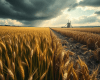
Severe weather led to one of the worst arable crop harvests in the UK, with significant losses in wheat, barley, and oilseed rape, while oat production increased, highlighting vulnerability to climate change.
Severe weather led to one of the worst arable crop harvests in the UK, with significant losses in wheat, barley, and oilseed rape, while oat production increased, highlighting vulnerability to climate change.
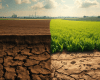
Soil health is declining globally due to climate change and industrial farming, prompting urgent need for sustainable agricultural practices and restoration.
The University of Reading and Forest Research have released a guide to assist UK farmers in selecting suitable tree species for agroforestry systems.

Rye, an ancient grain, offers health benefits and climate resilience compared to wheat, being lower in carbon footprint and more adaptable to poor soils. Increased rye cultivation could enhance biodiversity and soil health.

Discover how fonio, a nutrient-rich ancient grain, is emerging as a climate-resilient crop in Africa and beyond.
Denmark’s Green Tripartite pact, adopted by Parliament, introduces a CO2 tax on farmers starting in 2030, aims to restore nature and biodiversity, and sets ambitious environmental goals by 2045.

Oases are vital in deserts, sustaining life with water. Sand to Green uses solar-powered desalination to create an oasis in Morocco, promoting agriculture and ecological regeneration.

Indian farmers are pushing for the legalisation of a historic pricing mechanism that built India’s food security, but the problems they face demand far more.

Ukraine, Europe’s major wheat producer, faces economic challenges due to extreme weather impacting winter wheat crops. Climate change exacerbates the situation, threatening global food supply.
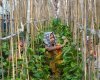
Erratic regional rainfall and temperature fluctuations pose risks for the hugely popular but climatically sensitive plant.
 A greener life, a greener world