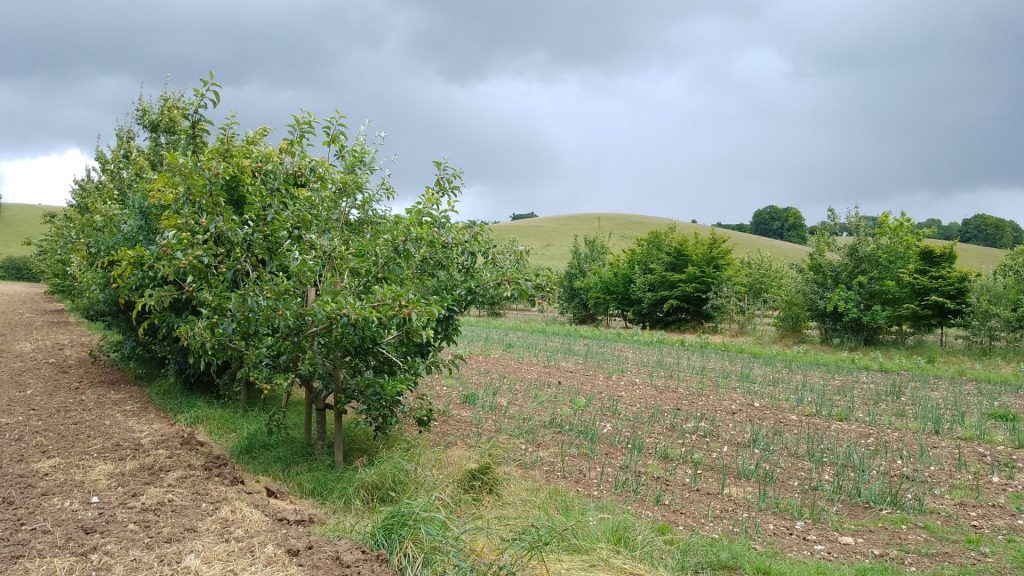
In November 2024, as part of National Tree Week, the University of Reading and Forest Research released ‘Tree Species Guide for UK Agroforestry Systems’ to help UK farmers plant more trees and shrubs.
An overview of tree and shrub species
It provides an accessible overview of tree and shrub species suitable for UK agroforestry systems. It lists the key attributes, both beneficial and detrimental, of 33 different tree species to help farmers, land managers, and foresters select the right species for their specific needs. The reports’ authors believe this information will enable farms to deliver as many benefits as possible from tree planting and also boost the resilience and productivity of farmlands.
Commenting on the Guide, Dr Tom Breeze, Senior Research Fellow in Ecological Economics at the University of Reading’s School of Agriculture, Policy and Development, said, “Farming with trees is a great way for farmers to meet environmental goals without compromising food production, but the barriers to entry can feel overwhelming. This Guide aims to equip farmers with the practical knowledge and tools they need to get started.”
The benefits of the Tree Species Guide
The Forestry Commission Chief Executive, Richard Stanford added, “Food production and environmental goals are under increasing scrutiny, and the effects of climate change are becoming apparent to us all. Agroforestry can offer improved productivity for livestock and crops and help build resilience to climate change. This indispensable Guide outlines which tree species are most suited to farmers’ needs and the conditions specific to their land.”
Due to intensive farming and a lack of regulation, woodland in many parts of the country has been vastly reduced. Intensive sheep grazing has left many of the mountains and hills bare across national parks in England, Wales, and Scotland, sparking environmental criticism. Although several tree planting, rewilding, and regenerative farming projects are starting to reverse that trend, most UK farmers still need to adopt more sustainable methods.
More widespread adoption of farming with trees could positively transform the landscape. This would help the UK meet its net-zero targets and be a key tool in better managing the increasing number of climate-fuelled extreme weather events.
The Tree Species Guide: A tool to overcome hurdles
The report’s authors believe that the Guide would overcome hurdles such as high upfront costs and a lack of familiarity with agroforestry methods, which are holding back many farmers from adopting and harvesting the long-term rewards.
The benefits of agroforestry systems
The agroforestry scientists who worked on the report list the many benefits of agroforestry systems. These include protecting soil quality, supporting long-term farm sustainability, producing a more diverse range of products, from timber to fruits and nuts, providing more shelter for livestock, and promoting higher animal welfare. Additionally, many set-up costs are lower than before, which can lead to increased income for the farm in the long term.
The Guide points out that various grants are now available to UK farmers to support tree planting on agricultural land, underscoring the increasing availability of agroforestry for UK farmers.
Anders Lorenzen is the founding Editor of A greener life, a greener world.
Discover more from A greener life, a greener world
Subscribe to get the latest posts sent to your email.
Categories: Agriculture, environment, food and drinks, nature, science, sustainability, UK
 A greener life, a greener world
1 reply »