By Anders Lorenzen
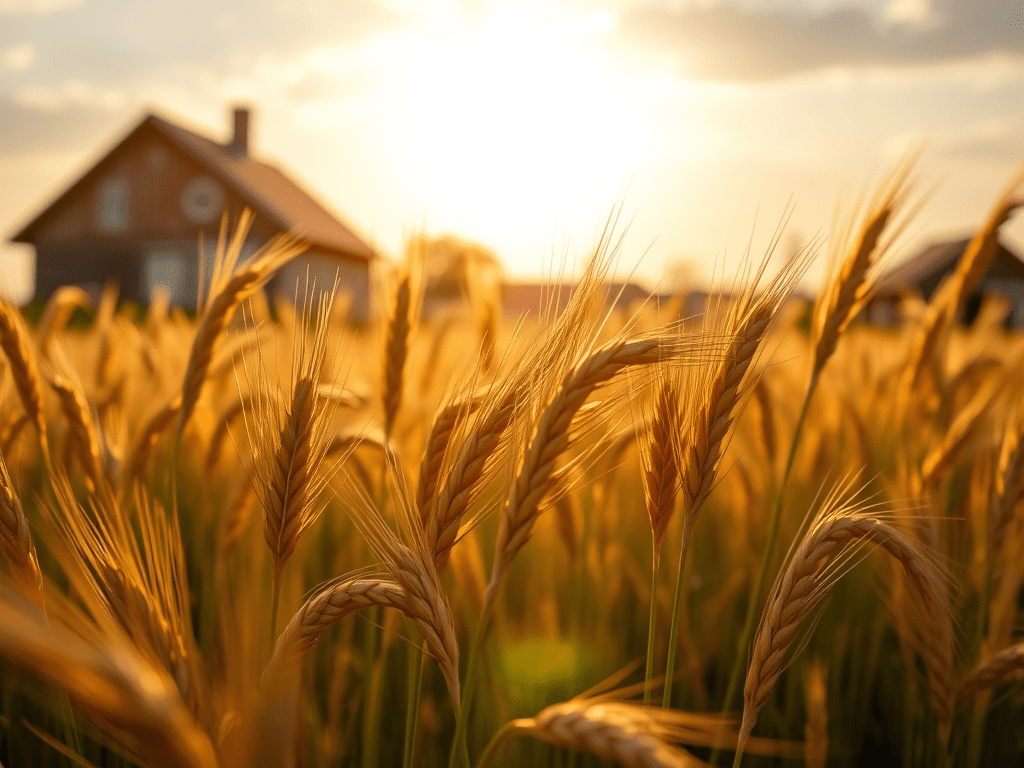
In this series, we look at individual crops and how they fare in a warming world. In this first article, we examine one of the world’s ancient grains: rye.
It is one of the world’s oldest known cereal grains and is classified as an ancient grain. But of the world’s total grain output, less than 3% comes from rye.
Dark, high-fibre rye bread popularises the grain, a key part of bread culture and identity in Germany, Eastern Europe, and the Nordic countries. The grain is believed to have originated in the Mediterranean region over 13,000 years ago, today known as Syria and Turkey.
While it is being touted as a food with significant health benefits and is far more nutritious than wheat, such as higher levels of fibre, minerals, vitamins, and less gluten, it also has several favourable climate properties.
As with all other crops, rye is impacted by climate change to some extent, but to a far lesser degree than wheat. It is far more resilient to weather shocks, requires less water than wheat, and can grow in poor quality and infertile soil, such as hard clay. After all, one of the reasons it emerged in the Nordic region was that during the Viking Age, it could handle harsh climatic conditions, whereas wheat could not.
Additionally, the root of the rye plant (Secale cereale) sequesters carbon, fixes nitrogen, prevents soil erosion and runoff, suppresses weeds, requires minimal to no-tillage, and is largely disease-free. Because of its ability to improve soil quality, many farmers grow the crop outside their growing season as manure crops.
Carbon footprint
It also has a significantly lower carbon footprint than wheat as it requires less fertiliser. In the case of wheat, by far, the most used is white or plain flour. This is not only a vast unhealthy but also an unsustainable production process as to produce plain wheat flour you discard all the good and vitamin-rich elements. A wheat berry is composed of the endosperm, germ and bran. Endosperm is used for the production of white flour, which means that 20% of the grain is not utilised, though it is sometimes used for animal feed. Depending on the flour formula, all of the berries are used for wholegrain wheat flour, the issue is that most of the wheat flour produced is white flour. This is significantly different from rye as the most significant use case is one of the darker rye flours for bread making, meaning there’s far less wastage. Additionally, a key component of traditional German and Nordic rye bread includes full rye grains.
The world’s soils used for arable land are in poor condition due to overproduction, a lack of crop rotation, overuse of pesticides that drive soil quality down and the use of wheat variants that prioritise high yields over quality.
But there is a shift happening, largely driven by climate change but also by farmers wanting more diversity and under pressure to do more to protect biodiversity. In the world’s third-most-producing wheat country, Russian farmers are, for instance, cutting back on wheat and choosing other crops as climate-fuelled droughts have reduced yields.
Compared to wheat, which is grown in more than half of the world’s countries, rye is grown in very few countries. However, this could be about to change as there is a surging interest in the grain as more people become aware of its health and climate-positive benefits. Of all cereal crops, rye accounts for less than 1%, with wheat accounting for over 30%.
If demand for rye grown were to increase, it would be good for our health and the planet. More carbon sequestration could present key biodiversity benefits, start to fix the poor state of agricultural soils, and better feed the world as climate impacts make inroads into crop yields.
Discover more from A greener life, a greener world
Subscribe to get the latest posts sent to your email.
Categories: Agriculture, biodiversity, environment, food, future, impacts, sustainability
 A greener life, a greener world
5 replies »