By Xu Na
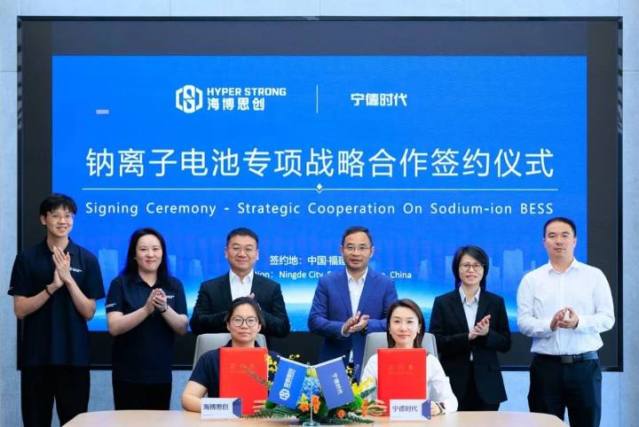
China’s CATL, the world’s largest electric vehicle battery maker, and energy storage company HyperStrong signed a three-year 60 gigawatt-hour sodium-ion battery storage agreement on 27 April, making it the largest-scale deployment of the sodium-ion battery yet, according to a company press release.
With the price of lithium rising significantly since the end of 2025, some commentators predict that large-scale commercialisation in the sodium-ion battery industry will take place in 2026.
A greener alternative
Sodium-ion batteries are generally regarded as a more environmentally friendly and sustainable alternative to lithium-ion batteries.
Most chemical components used in sodium-ion batteries are non-toxic and renewable, while lithium-ion batteries contain components that, when improperly disposed of, cause environmental pollution. Sodium is also nearly 1,200 times more abundant than lithium.
Sodium-ion’s challenges
However, the development of sodium-ion batteries faces setbacks such as low energy density and high cost due to the lack of economies of scale.
At present, the cost of sodium-ion battery cells is CNY 0.5-0.7 per watt hour (USD 0.074–0.1), higher than that of lithium iron phosphate (LFP) batteries, which cost CNY 0.3-0.5 per watt hour, HiNa Battery Technology’s Li Shujun told Sina Finance.
Steady progress
CATL has significantly improved the energy density of sodium-ion batteries, with those developed for passenger vehicles reaching 175 watt hours per kilogram, according to Beijing Daily.
This energy density remains lower than the 200-350 range of lithium-ion batteries, however, limiting their use in high-end passenger vehicles and long-range commercial vehicles, the outlet noted.
But performance of sodium-ion batteries could gradually approach that of LFP batteries over the next three to five years, Chen Renjie, a professor at the Beijing Institute of Technology, told the outlet. Against the backdrop of China’s policy support for new energy storage development, alongside rising lithium prices and continued energy supply shocks stemming from the Gulf conflict, momentum for advancing sodium-ion batteries seems likely to remain strong.
EXPLORE ADDITIONAL INSIGHTS IN OUR DATA DASHBOARD
Track how these trends compare with real-time energy market movements in our global energy and climate dashboard →
First published in Dialogue Earth.
Discover more from A greener life, a greener world
Subscribe to get the latest posts sent to your email.
Categories: battery storage, China, Energy, finance, technology
 A greener life, a greener world