May 2026 – Week 1
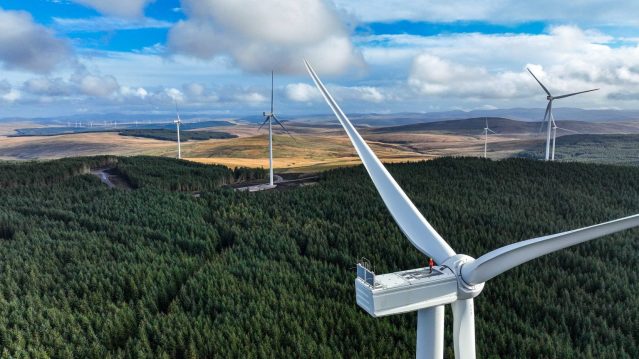
As part of an expanded focus on real-time coverage, this live blog tracks developments across global energy markets, including electricity prices, oil and gas benchmarks, and renewable generation trends.
It is updated throughout the week with the most significant developments around energy and related markets with a sustainability lens.
Last week’s live blog can be found here.
Key developments we are tracking this week:
- Volatility across oil, gas and electricity markets
- Clean energy’s response to the energy crisis
- Policy shifts driven by the energy crisis
This blog has now closed, but this week’s live blog is live and can be found here.
Latest
Saturday 9th of May 2026
23:10 GMT
Oil spill: Satellite images on Friday detected an oil spill in the Iranian waters near the critical oil port terminal Kharg Island.
Earlier updates
09:20 GMT
Shipping: The world’s largest shipping company, Denmark’s Maersk, yesterday offered a different perspective that the disruption to the Strait of Hormuz is not the key constraint, and the opening of it may not change that much.
The Danish shipping giant argued that cargo traffic is down due to the high oil price and the resulting drastic rise in fuel prices.
The Maersk comments came as the company announced disappointing Q1 earnings with net profit for January to March falling to $100m, which is around 12 times lower than a year earlier.
Friday 8th of May 2026
14:10 GMT
Company updates: The global oil and gas giant, Shell Plc, is the latest oil major to report larger-than-expected profit earnings.
In the first quarter of 2026, the company at $6.9 billion, reached its highest first-quarter profit figures for two years, which has prompted it to increase shareholder dividends to 5%.
14:00 GMT
Jet fuel: In April global jet fuel exports hit a ten-year, seasonal low.
09:50 GMT
Electricity generation: Analysis conducted by Carbon Brief shows that due to strong renewable energy generation in the UK, the country has avoided the need for gas imports worth £1.7bn since the start of the Iran war.
Wind and solar have generated a record 21 terawatt hours (TWh) on the island of Great Britain since the end of February 2026, when the US and Israel first attacked Iran.
Thursday 7th of May 2026
21:20 GMT
Geopolitics: The Washington Post reports that in the wake of the US seizing and capturing the leader of Venezuela, Nicolas Maduro, the Trump Administration awarded oil deals worth $500 million to companies with a history of bribery and corruption.
16:05 GMT
Energy policy: In Australia, a large natural gas project has been given the green light.
Both the federal government and the territory of Victoria have given the nod to the Otway Basin drilling project, which has the potential to supply 65 petajoules of natural gas, which is about one-third of the natural gas needs in the state.
It is located 9km off the shores of Peterborough and Port Campbell, on the Great Ocean Road 12km west of the popular tourist attraction, the Twelve Apostles and is slated to start producing gas by 2028.
The approval of the project has angered environmentalists with Greenpeace Australia Pacific labelling it a risk to the pristine ocean environment and the climate.
11:05 GMT
Energy policy: Jim Ratcliffe, the wealthiest person in UK, has launched a scathing critique of Europe’s energy policy, stating:
Europe is all over the place. From an investment point of view, you always go to the stable rather than the unstable.
Ratcliffe, who is the founder and owner of chemical giant INEOS, launched the attack after his company joined up with the oil and gas giant Shell, for a new oil and gas exploration in the US’s Gulf of Mexico.
Ratcliffe added:
I would have a lot more confidence in investments in America in the energy sector than I would in Europe.
In addition to INEOS, Ratcliffe is also heavily involved in sports – having a majority stake in Manchester United, one of the world’s leading football clubs, and the professional road cycling team INEOS Grenadiers, as well as a host of other sports sponsorships.
The Gulf of Mexico is the site of the worst oil spill disaster in history, BP’s Deepwater Horizon oil spill.
Wednesday 6th of May 2026
16:00 GMT
Snap analysis: Markets highly reactive to Trump statements
Anders Lorenzen, Editor-in-Chief, A greener life, a greener world
Throughout the unfolding energy crisis that started in March, after Israel and the US launched military strikes against Iran, the markets and in particular the oil futures have almost blindly reacted to Trump comments.
It is entirely plausible that this is a tactic deployed by the US government to influence oil prices.
It is somehow surprising the huge weight the markets are placing on any Trump statements, as observers would be aware, of the many and contradictory statements that is now expected from the US president.
Meanwhile, there’s little reflection in the oil futures price changes of the actual facts, the daily loss of oil output, the rapid decline of crude oil inventories, the destruction of oil and gas infrastructure, and the high price of the physical oil price.
Even if the Strait of Hormuz opens and the war ends tomorrow, oil futures should remain high for the foreseeable future, as we are a long way off returning to output levels prior to the war. There are even credible and plausible arguments that we would never return to the outputs prior to the start of the war, as clean energy has already taken over some of the oil demand, and it is not coming back. Don’t take my word for it; this is what the head of the IEA, Fatih Birol, has argued.
16:00 GMT
Geopolitics: Donald Trump has walked back earlier comments that face-to-face conversations with Iran could resume. Now saying it is too soon to consider.
The latest developments come on the back of news reports that the two countries are close to a one-page framework to end the war. Trump’s walkback comes after Iran has dismissed those rumours.
As oil futures this morning reacted positively to Trump’s comments, they have now started to rise again.
11:20 GMT
Gas prices: Our end of April data shows that for the third consecutive week, gas prices are up across all of the world’s main gas pricing benchmarks.
You can see the data on our data dashboard, including week-by-week changes.
11:05 GMT
Electricity generation: UN’s Secretary-General, Antonio Guterres have responded to IRENA’s findings:
The worst energy crisis in decades has exposed the true cost of fossil fuel dependence. But another path is now possible. Renewable power is increasingly the most affordable, reliable and secure option. Let us accelerate the transition, invest in energy infrastructure, and strengthen international cooperation to finally deliver clean, homegrown power to people everywhere.
11:00 GMT
Electricity generation: In a further boost to the economics of renewable energy, the International Renewable Energy Agency (IRENA) has, in a newly released report, documented that solar and wind energy paired with battery storage are delivering reliable and cost-competitive round-the-clock electricity generation.
Data released in IRENA’s report: 24/7 renewables: The economics of firm solar and wind, show that the levelised costs of electricity (‘firm costs’) for solar plus storage range from USD 54 to USD 82 per megawatt-hour (MWh) in high-quality resource regions, compared with USD 70–85 per MWh for new coal in China and more than USD 100 per MWh for new gas globally.
10:50 GMT
Oil supply: In the wake of the oil crisis, the political tensions between the US and Canada appear to have been put on hold, for now, as the two countries have struck a deal to increase US imports of Canadian crude oil by at least 4400,000/bpd, with oil companies targeting long-term contracts of 450,000/bpd.
10:45 GMT
Oil supply: Meanwhile, crude oil inventories and reserves are continuing to drop. The American Petroleum Institute (API) estimated that crude oil inventories in the US fell by 8.1 million barrels last week( week ending May 1). In the previous week, the country’s inventories fell by 1.79 million barrels – suggesting an accelerating pace of declining crude oil inventories.
10:30 GMT
Oil price: Concerns that oil futures are primarily driven by geopolitical speculation and not oil supply have played out this morning as the markets reacted to Trump announcing he would pause their involvement in escorting vessels through the Strait of Hormuz.
The price of Brent Crude has dropped significantly to $103/bbl and WTI to well below the $100 mark to $95/bbl. This represents a 6% and 8% drop respectively.
Tuesday 5th of May 2026
16:45 GMT
Oil supply: We are turning our attention back to the war between Russia and Ukraine, where the Russian Kirishi refinery, located southeast of St. Petersburg, has been hit by a Ukrainian drone.
The refinery, which has a capacity of producing 400,000 bpd of refined crude oil, has not been operational since March due to another Ukrainian drone strike.
In recent months, Ukraine intensified drone attacks on Russian oil infrastructure, its production and exports – reacting toe the global surge of crude oil futures but also the actual physical oil price.
12:20 GMT
Transport: Jan Rosenow, Professor of Energy & Climate Policy at the University of Oxford are picking up on the European unprecedented rise of electric vehicles (EV’s), a trend that has accelerated even further since the war in Iran began.
He points out that in Q1 2026 registrations hit 547,000 — up 32% on the same period last year. And in March 2026 almost 50% more than in March 2025.
12:05 GMT
Oil supply: The largest oil and gas producing country in Europe, Norway, has responded to the oil crisis by offering up 70 new oil and gas drilling permits.
12:00 GMT
Oil supply: According to Goldman Sachs, global oil inventories have reached an eight-year low to around 101 days of expected demand, with the rate of depletion happening so fast it leaves the market vulnerable to further shocks.
The bank further estimates that with the Strait of Hormuz bottleneck unresolved, by the end of May, this would decrease to 98 days.
Monday 4th of May 2026
17:50 GMT
Oil price: Oil futures have reacted to no significant breakthrough on peace negotiations between the US and Iran, the future of the Strait of Hormuz remaining uncertain and volatile, and military attacks on oil and gas infrastructure surging on Monday. As trading closed on Wednesday.
The price of Brent Crude has surged to $115/bbl and WTI to $106/bbl, up 6% and 4% respectively from Friday’s trading close.
17:40 GMT
Catch-up: Why not catch up with last week’s developments and access last week’s live blog below:
17:30 GMT
Company updates: More context and details on the Ørsted and CIP deal can be found in our article below:
Saturday 2nd of May 2026
18:00 GMT
Company updates: A pretty significant deal has been struck between two Danish-headquartered, but global, clean energy giants.
Ørsted, the world’s largest offshore wind developer, and Copenhagen Infrastructure Partners (CIP), a fund manager and lender and a significant clean energy investor, have acquired Ørsted’s onshore wind platform and have established a new energy company, Perigus Energy.
With the acquisition of Ørsted‘s onshore wind assets, the company that is to be headquartered in Ireland, has a portfolio of 862 megawatts (MW) of onshore wind capacity spread across Ireland, Germany, the UK and Spain.
In addition to managing these assets, the new company announced that they will continue to build out new renewable energy, but in addition to onshore wind, also in solar and battery technologies.
Discover more from A greener life, a greener world
Subscribe to get the latest posts sent to your email.
Categories: Energy, live updates
 A greener life, a greener world