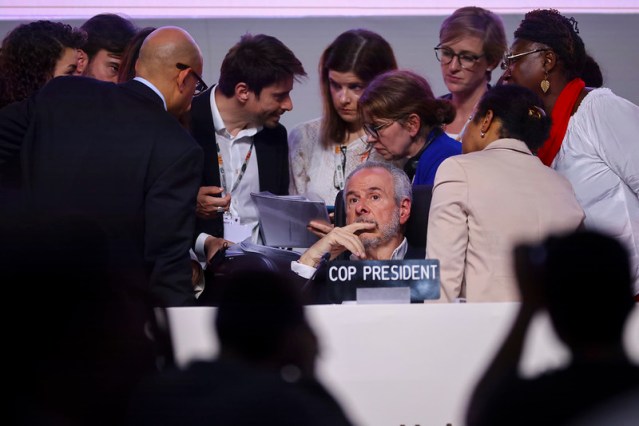
A major international conference focused on accelerating the transition away from fossil fuels has opened today in Santa Marta, Colombia, bringing together governments, industry leaders and climate advocates at a critical moment for global energy policy.
Running through to Wednesday 29 April, the summit is expected to address some of the most pressing questions facing the energy transition—from phasing out oil and gas production to scaling renewables, financing climate action and ensuring a just transition for developing economies.
The gathering comes amid growing tension between climate commitments and continued fossil fuel expansion, with recent shareholder revolts, policy shifts and market volatility highlighting the challenges of aligning economic and environmental priorities.
Key themes to watch:
- Commitments to phase down or phase out fossil fuels
- Financing mechanisms for the Global South
- The role of oil and gas companies in the transition
- Scaling renewables and grid infrastructure
- Just transition frameworks for workers and communities
This liveblog is now closed, but you can see our latest and currently active live blogs here.
We’ll be providing live updates, analysis and key takeaways throughout the duration of the summit.
Latest
Thursday 30th of April 2026
10:40 GMT
We will keep this liveblog open for the rest of the week as more details emerge, more reaction and analysis, as well as our own analysis and reporting.
10:35 GMT
The reactions to the summit has started to come in.
We have received the reaction below from Nick Robbins, Senior Director, Finance and Private Sector at the World Resources Institute (WRI):
Santa Marta delivered a new way of making climate progress by bringing together a group of nations from both the Global North and the Global South, from the major economies of the G20 and the most vulnerable small island states. What unites these front-running nations is the willpower to work through the tough and necessary imperative of transforming the global energy system together. offered a grounded and hopeful response to the continuing energy shocks. Over 130 countries worldwide have introduced emergency measures in recent weeks. Countries examined how the crisis response can accelerate the shift to a clean, cheap, and—crucially—stable energy system and how to avoid locking in deeper fossil fuel dependence. Looking ahead, the focus of the coalition forged in Santa Marta will be on implementation back at home. One practical way this can happen is for countries to draw up their own national roadmaps to transition away from fossil fuels, following in the footsteps of both France and Colombia.
10:25 GMT
The organisers have divided the key outcomes into five areas:
1: Sustained effort for transitioning away from fossil fuels, as we outlined in the previous update, next year’s conference has been announced.
2: A coordination group has been established to ensure continuity, measure progress and set up alliances and initiatives to implement the transition away from fossil fuels. It will be linked to the COP30 Activation Group 4: Transitioning away from fossil fuels in a just, orderly and equitable manner.
3: Establish and ensure complementarity with UNFCCC, existing frameworks and sustaining momentum. Share the roadmap with the COP30 Presidency ahead of the pre-COP31 meetings in Bonn this June and formally present it at the London Climate Week. It will also be handed over to UN Secretary-General, Antonio Guterres, in New York
Climate Week
4: Workstreams will be established with the aim of identifying concrete opportunities and channels for co-operation to overcome fossil fuel dependency ahead of the second conference.
5: Finally, the announced scientific panel: The Science Panel for the Global Energy Transition (SPGET), is established to advise and support countries in overcoming fossil fuel dependency. The panel will develop roadmaps aligned with the .5°C trajectory, aimed at dismantling legal, financial, and political barriers to the energy transition.
10:05 GMT
The conference has now officially come to close.
56 countries, which represent one third of the world’s GDP, are the first of their kind gathering in transitioning the world away from fossil fuels. Next year it will be jointly hosted by Ireland, the island state of Tuvalu, which is on the front line in the battle against climate change due to it’s receding coastline.
00:30 GMT
While we are still awaiting for the official summit documents to be published, we know that all of the 56 countries who took part in the first summit to transition away from fossil fuels has committed to a fossil fuels phase-out.
Throughout Thursday, we will bring you the reactions as they start coming in and, of course, the published final documents.
Wednesday 29th of April 2026
14:45 GMT
Yesterday, France published it’s roadmap to transition away from fossil fuels.
The roadmap sets a goal of reducing the share of fossil fuels in final energy consumption to 40% by 2030 and 30% by 2035, and then reaching carbon neutrality by 2050.
14:05 GMT
The president of Colombia, Gustavo Petro, clearly had no time for diplomacy as he launched a strong accusation that many would see as divisive:
Blaming fossil fuel interests for taking ever more desperate measures to prevent a transition to green energy, Petro who sits on the far left of the political spectrum, argued:
There is inertia in the power and the economy of this archaic form of energy – fossil fuels – that leads to death. Undoubtedly, that form of capital can commit suicide, taking with it humanity and [other] life. The question that needs to be asked is whether capitalism can truly adapt to a non-fossil energy model.
Petro is a former economist and guerrilla member, further stressed that the world is in a perilous position:
We are heading towards barbarism. And barbarism is the prelude to, or the very essence of, fascism.
Tuesday 28th of April 2026
16:05 GMT
More details has emerged from the Colombian hosts about the establishment of the scientific panel which will be named the Scientific Panel for the Global Energy Transition (SPGET) and is the first of its kinds worldwide.
It is to bring together some of the world’s leading scientists spanning across climate, economics, and technology. They will contribute input for the development and strengthening of relevant, urgent, and concrete actions, supported by the best available evidence, and advice on policy creation needed to phase out fossil fuels.
Commenting on the panel, Irene Vélez Torres, Colombia’s Minister of Environment and Sustainable Development:
This panel not only addresses a historical debt owed by an organization dedicated, finally and for the first time, to moving away from fossil fuels in the energy mix; it also speaks to other challenges regarding the social and economic limitations of accelerating this transformation. This panel is the first of its kind designed to compile, over the next five years, the scientific evidence that will enable cities, regions, countries, and coalitions to take this great leap forward.
15:55 GMT
Climate Home reports that some ministers are starting to draw up wish lists of policies that could emerge on the back of the summit.
A grouping of 18 countries which include the host country of Colombia with the rest mainly being small island states have called on the summit to recognise the need for a new international instrument for leaving coal, oil and gas in the ground.
The grouping a pushing for formal negotiations for a new legally binding Fossil Fuel Treaty.
Monday 27th of April 2026
17:55 GMT
A coalition of climate activist groups have staged a protest by disrupting the operations at the largest coal export terminal in Colombia, the Drummond coal port near Santa Marta, where the conference is held.
The groups that include Global Sumud Flotilla, Climate Justice Flotilla, Debt For Climate, 350, ANGRY, United For Climate Justice, GARN, Resiste Glencore, and regional frontline communities and workers demanded an energy embargo on fossil fuels flows and argued that they materially sustain genocide, colonial occupation. They called for an international transition framework that is rooted in justice and accountability
11:10 GMT
C40, the network of nearly 100 mayors across the world’s leading cities, has a released statement saying that cities can and should be at the heart of transition from fossil fuels to renewable energy:
‘Cities are central to this transition. Urban centres account for 75% of global energy-related emissions, making local action critical to global progress. They are also where the impacts of fossil fuel dependency are most visible, from rising living costs to worsening air pollution and climate-related disruptions. Across C40 cities, per capita emissions have already fallen below pre-pandemic levels, marking four consecutive years of decline and demonstrating that sustained progress is possible’.
Sunday 26th of April 2026
21:20 GMT
Yesterday, the Swedish climate scientist, Professor Johan Rockström unveiled a new scientific panel of experts with the core objective to advise the world how to say goodbye to fossil fuels.
Rockström who serves as the director of the Potsdam Institute for Climate Impact Research is one of the world’s most accomplished climate scientists and one of the key influences around coining the term of Planetary Boundaries.
Saturday 25th of April 2026
16:30 GMT
Naidoo spoke as a new global scientific panel on the energy transition was launched in Santa Maria:
16:20 GMT
The former Greenpeace International Chief Executive, Kumi Naidoo, now with Fossil Fuel Treaty Initiative have laid out what he see as the clear path forward:
12:20 GMT
The conference in Colombia is happening in the shadow of the global energy crisis caused due to the conflict in the Middle East.
You can follow the latest developments and updates in our live blog below:
09:45 GMT
The conference which is jointly hosted by Colombia and the Netherlands have confirmed the below countries as participants, a list that could still increase:
- Angola
- Australia
- Austria
- Bangladesh
- Belgium
- Brazil
- Cambodia
- Cameroon
- Canada
- Chile
- Costa Rica
- Denmark
- Dominican Republic
- European Union
- Fiji
- Finland
- France
- Germany
- Ghana
- Guatemala
- Iceland
- Ireland
- Italy
- Jamaica
- Kiribati
- Luxembourg
- Maldives
- Marshall Islands
- Mauritius
- Mexico
- Mongolia
- Netherlands
- Nigeria
- Norway
- Palau
- Panama
- Papua New Guinea
- Philippines
- Portugal
- Senegal
- Singapore
- Slovenia
- Spain
- Sri Lanka
- Sweden
- Switzerland
- Trinidad and Tobago
- Türkiye
- Tuvalu
- United Kingdom
- Tanzania
- Uruguay
- Vanuatu
- Vietnam
09:30 GMT
While we are waiting for the first updates to come in from Colombia, over 50 countries are expected to join the discussions, in what resembles a movement that has continued to grow since it was fits announced during the closing days of COP30 last year.
Friday 24th of April 2026
23:00 GMT
The conference opening today in Santa Marta in Colombia brings together governments, international organisations and industry leaders to accelerate efforts to move the global economy away from coal, oil and gas.
It was announced in the backdrop of the COP30 summit amidst the frustration in uniting UN member countries to commit to the phasing out of fossil fuels.
While it is unlikely any agreements will be made in this first summit, but the ambition is to lay the guidelines and start to build the bridges to get commitments and build up momentum for phasing out fossil fuels.
Discover more from A greener life, a greener world
Subscribe to get the latest posts sent to your email.
Categories: climate change, Energy, live updates
 A greener life, a greener world